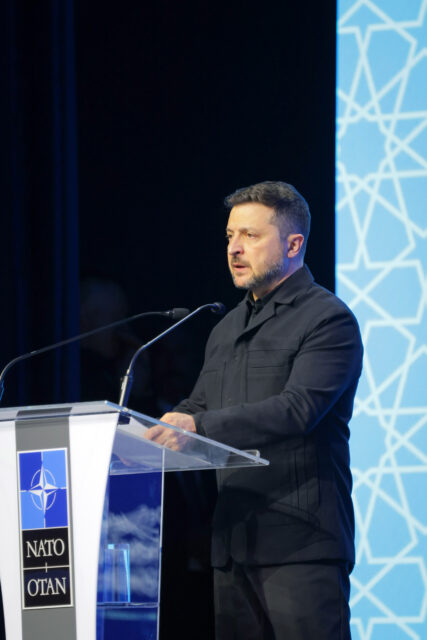
U.S. President Donald Trump said Russia and Ukraine had agreed to an immediate “energy ceasefire” covering attacks on energy infrastructure, but Ukrainian President Volodymyr Zelenskyy said he had not been given the same understanding and stressed that Kyiv would only stop strikes on Russian refineries if Moscow stopped attacking Ukrainian energy sites. The conflicting statements underscored how fragile the announcement remained within hours of being made. No detailed joint document was released, and neither Moscow nor the White House immediately provided a full list of targets covered by the arrangement.
Trump presented the deal as immediate
Trump said the agreement would take effect at once and described it as a step toward reducing the economic and humanitarian cost of the war.
The announcement came as energy markets remain highly sensitive to attacks on refineries, power stations and fuel depots.
Zelenskyy’s response was more cautious
Zelenskyy said Ukraine was willing to stop strikes on Russian refineries if Russia stopped targeting Ukrainian energy infrastructure.
He emphasized that Kyiv needed real guarantees and clear reciprocal commitments before treating the ceasefire as established.
Energy infrastructure has become a core battlefield
Russia has repeatedly attacked Ukraine’s power generation and grid infrastructure, while Ukraine has expanded long-range drone strikes against Russian oil refineries and fuel facilities.
Those attacks have military as well as economic consequences because fuel production and electricity supply support both civilian life and war logistics.
The diesel market adds political pressure
Trump has faced domestic pressure over high fuel prices in the United States. Washington recently allowed a temporary increase in Russian diesel supply despite sanctions.
That move drew criticism from Ukraine and U.S. lawmakers who argued that Russian energy revenue helps finance Moscow’s war effort.
A ceasefire could benefit both sides differently
Ukraine would gain relief for its electricity system and civilian infrastructure. Russia could reduce damage to refineries that have become a growing target of Ukrainian drones.
Because the vulnerabilities are different, defining what counts as “energy infrastructure” will be important.
Verification will be difficult
Even if both governments formally agree, monitoring long-range attacks is complicated. Drones and missiles may hit mixed-use facilities, and each side may accuse the other of violating the deal.
A credible arrangement would likely require rapid communication channels and some mechanism for investigating disputed incidents.
The announcement does not amount to a broader ceasefire
Fighting continues along the front line, and Russian attacks on Ukrainian cities have not stopped. An energy agreement would cover only one category of targets.
It could nevertheless reduce civilian hardship and lower the risk of further disruption to global fuel markets.
Ukraine’s election dispute complicates relations
Trump also renewed pressure on Zelenskyy over elections, arguing that Ukraine needs a new vote. Zelenskyy responded that elections are prohibited under martial law and suggested a 60-day full ceasefire could create conditions for voting.
The dispute adds political tension to negotiations that already involve security guarantees and territorial questions.
Europe will watch implementation closely
European governments remain deeply involved in supporting Ukraine and in sanctions policy toward Russia. Any energy truce could affect debates over military aid and future negotiations.
European officials will also want to know whether Russia treats the arrangement as a temporary tactical pause or part of a broader diplomatic process.
Markets may react before diplomats agree on details
Oil and refined-fuel traders respond quickly to signs that Russian refinery output or Ukrainian energy infrastructure may be safer.
If attacks genuinely decline, risk premiums could fall. If the announcement collapses within days, the opposite reaction is possible.
The next 48 hours will be crucial
The credibility of Trump’s announcement will depend on whether both sides visibly reduce attacks and publish matching descriptions of the deal.
For now, the phrase “energy ceasefire” describes a political announcement rather than a fully documented peace mechanism. Zelenskyy’s call for guarantees makes clear that significant work remains before the arrangement can be treated as durable.
Sources
- Reuters, Oct. 11, 2026
- Associated Press, Oct. 11, 2026
- Statements by Donald Trump and Volodymyr Zelenskyy
Refinery attacks have become part of the sanctions debate
Ukraine’s strikes on Russian refining capacity have had effects beyond the battlefield because diesel and other refined fuels are already tight in global markets. Washington’s recent decision to allow more Russian diesel into world markets highlighted the tension between keeping energy prices under control and maintaining economic pressure on Moscow. An energy ceasefire could reduce that conflict, but only if both sides interpret the rules in the same way.
Kyiv will also want to avoid an arrangement that protects Russian export infrastructure while leaving Ukrainian civilian power systems exposed. That is why Zelenskyy’s emphasis on reciprocity and guarantees matters. A credible deal would need to protect both categories of infrastructure rather than freeze only one side’s most vulnerable assets.