Russian Foreign Minister Sergei Lavrov and Chinese Foreign Minister Wang Yi reaffirmed their countries’ strategic partnership during talks in Azerbaijan, where the two diplomats discussed Ukraine, Iran and relations with the United States. The meeting took place on the sidelines of the Conference on Interaction and Confidence Building Measures in Asia, bringing together governments at a moment of heightened geopolitical tension.
According to the Russian Foreign Ministry, the two sides praised the development of their comprehensive partnership and coordinated positions on major international issues.
Ukraine remained a central topic
Russia’s war in Ukraine continues to shape Moscow’s relations with both Beijing and Washington. China has not joined Western sanctions against Russia and has maintained large trade and energy links with Moscow.
At the same time, Beijing publicly calls for negotiations and says the conflict should end through diplomacy.
Iran was also on the agenda
The ministers discussed the continuing crisis around Iran and the risk that conflict could expand across the Middle East. Both Russia and China have called for de-escalation and warned that a broader war would threaten regional stability.
Energy security is an important concern for Beijing because China is one of the world’s largest oil importers.
Relations with the United States connect the two powers
Moscow and Beijing both have increasingly difficult relationships with Washington, although the nature of those disputes is different. Russia faces sanctions and direct confrontation over Ukraine, while China is locked in strategic competition with the United States over trade, technology and security.
Those pressures have encouraged closer political coordination between Russia and China.
The ‘no limits’ partnership remains important
Russian President Vladimir Putin and Chinese President Xi Jinping have repeatedly described the relationship as strategically important. Their governments expanded trade and diplomatic cooperation after Russia’s full-scale invasion of Ukraine.
China has become a crucial market for Russian energy and goods as Moscow lost access to many Western markets.
The relationship is not a formal military alliance
Despite close cooperation, Russia and China do not have a NATO-style mutual-defense treaty. Each government maintains independent interests and avoids commitments that would automatically draw it into the other’s conflicts.
This distinction allows Beijing to maintain economic ties with Europe while still supporting broad diplomatic cooperation with Moscow.
Azerbaijan provided a significant venue
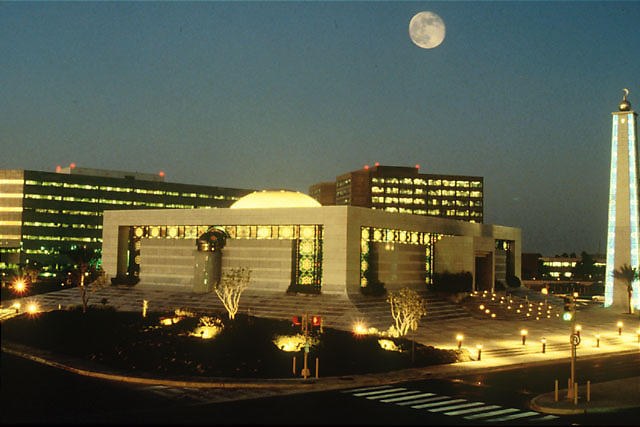
The meeting took place at an Asian security forum in Azerbaijan, a country that sits at the intersection of Europe, the Caucasus, Russia, Turkey and Central Asia.
Regional diplomacy has become more important as major powers compete for transport routes, energy corridors and political influence.
Russia wants to show it is not isolated
Western governments have sought to isolate Moscow through sanctions and diplomatic pressure. High-level meetings with China help Russia demonstrate that it retains powerful international partners.
For Moscow, the political symbolism of continued engagement with Beijing is nearly as important as the economic relationship.
China wants stability without abandoning Russia
Beijing benefits from discounted Russian energy and strategic cooperation, but it also has strong trade links with Europe and the United States. A prolonged global conflict can therefore create economic costs for China.
Its diplomacy seeks to preserve the partnership with Moscow while avoiding direct responsibility for Russia’s military actions.
Iran adds another layer to strategic coordination
Russia, China and Iran have all faced varying degrees of U.S. pressure and sanctions. Their interests are not identical, but they increasingly cooperate in forums that challenge Western dominance.
A widening conflict involving Iran could test how far that political coordination translates into practical support.
What to watch next
The substance of Russia-China relations will be measured less by official language than by trade, energy flows, technology transfers and diplomatic actions at the United Nations.
The Lavrov-Wang meeting showed that despite growing pressure from the United States and Europe, Moscow and Beijing continue to treat strategic coordination as a long-term priority.
Sources
- Russian Foreign Ministry statement, October 14, 2026
- Reuters, October 14, 2026
Economic ties continue to deepen
Trade between Russia and China has expanded significantly during the war, especially in energy, vehicles, machinery and consumer goods. Russia has become more dependent on China as access to Western technology and finance narrowed, while Beijing has gained access to discounted commodities.
That imbalance means the partnership is strategically valuable to both sides but increasingly asymmetric in economic terms.