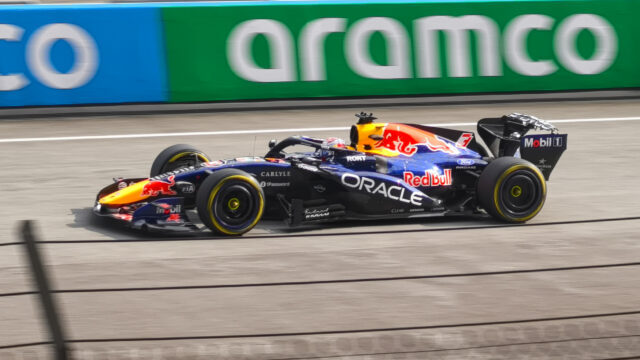
Max Verstappen claimed pole position for the Singapore Grand Prix for the first time in his Formula One career, completing a strong Saturday after winning the sprint earlier in the day. The Red Bull driver set a 1:31.373 lap around Marina Bay, beating Charles Leclerc by just 0.054 seconds. Lewis Hamilton qualified third, giving Ferrari two cars directly behind Verstappen for Sunday’s race.
Verstappen’s first run was enough
The Dutch driver produced his decisive lap early in Q3. Several rivals appeared capable of improving, but changing track conditions and small mistakes prevented anyone from dislodging him.
Verstappen did not need a faster second attempt.
Leclerc came within 0.054 seconds
Charles Leclerc delivered a strong final lap but narrowly missed pole.
He later said mistakes and a misjudgment during the session cost him a better chance of taking first on the grid.
Hamilton had been fastest earlier
Lewis Hamilton topped parts of Q1 and Q2 and looked like a serious pole contender.
He could not improve enough in the final phase and settled for third, still giving Ferrari a strong strategic position.
Antonelli continued Mercedes’ progress
Kimi Antonelli qualified fourth after saying Mercedes was beginning to understand recent upgrades.
The result was important because the team had experimented with different specifications across its two cars during the weekend.
Norris starts fifth
Lando Norris qualified fifth, putting McLaren behind Red Bull and both Ferraris.
That leaves the team with more work to do in a race where track position is historically important.
Piastri is further back
Oscar Piastri qualified seventh according to the official results, after a difficult Saturday that also included contact with teammate Norris in the sprint.
McLaren will need to avoid further internal incidents if both drivers are to maximize points.
Russell faces a tougher Sunday
George Russell was sixth in qualifying but entered the session with a grid penalty hanging over him.
That reduces Mercedes’ strategic options and gives Antonelli greater responsibility near the front.
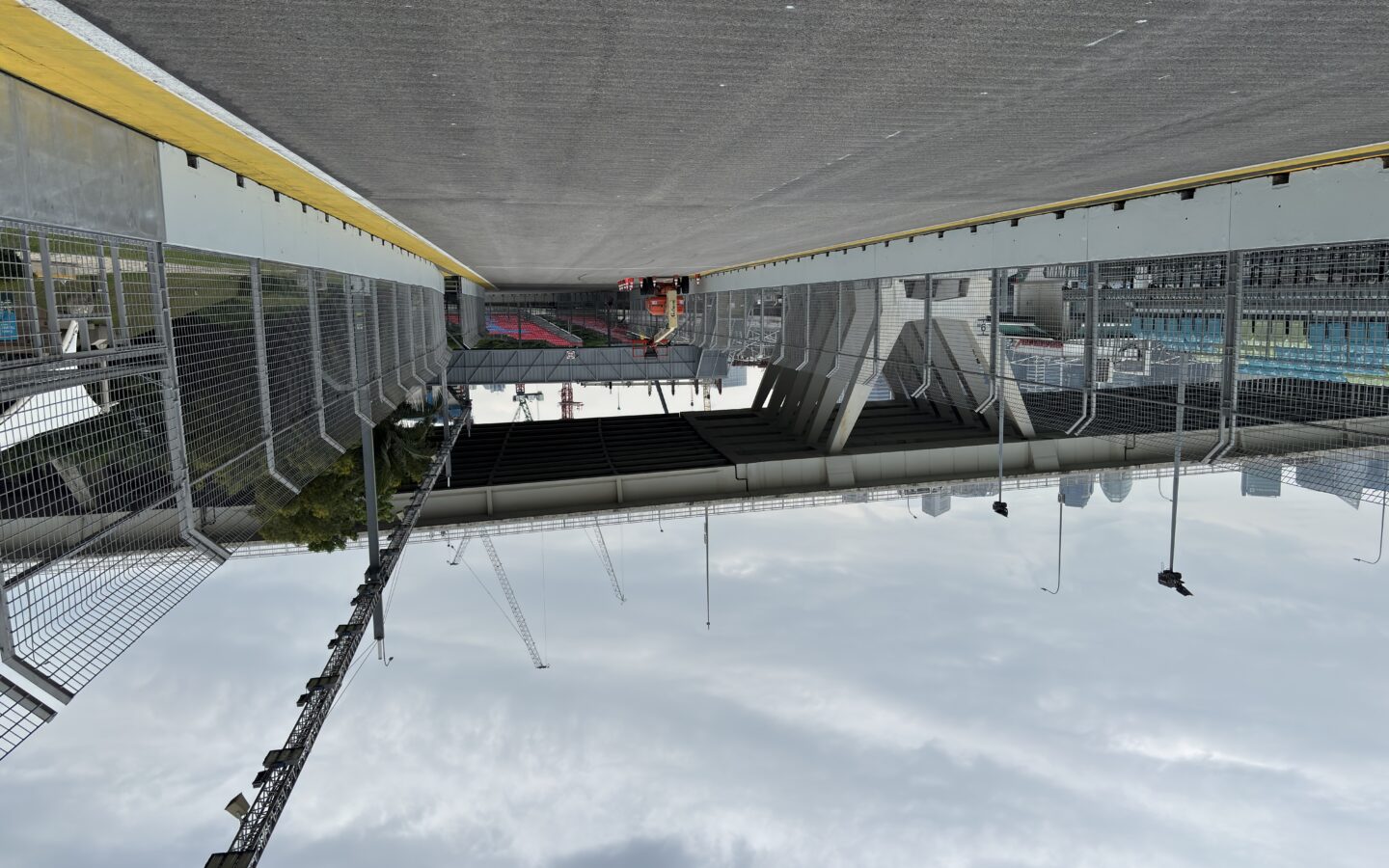
Singapore makes overtaking difficult
Marina Bay is a narrow street circuit with limited conventional passing opportunities. Track position and pit-stop timing are therefore especially important.
Safety cars can also transform strategy because incidents are common under the lights.
Verstappen is chasing a weekend sweep
After winning the sprint and taking Grand Prix pole, Verstappen has put himself in position for a near-perfect Singapore weekend.
Red Bull’s pace is notable because the circuit has not always been one of the team’s strongest venues.
Ferrari has two strategic cards
Leclerc and Hamilton starting second and third gives Ferrari options. The team can split pit strategies or pressure Verstappen at different stages.
Managing the start will be crucial because a Ferrari car ahead of Red Bull could change the entire race.
Sunday’s race remains unpredictable
Heat, tire degradation, walls and safety-car probability make Singapore one of the most demanding events on the calendar.
Verstappen starts as the favorite, but the tiny qualifying margins show that Ferrari is close enough to capitalize on any mistake.
Sources
- Formula 1 official qualifying results
- Formula 1 post-qualifying reports, Oct. 10, 2026
Qualifying pace suggests a close race
The gap between Verstappen and Leclerc was only 0.054 seconds, while Hamilton was less than a tenth further back. Such small margins suggest the front-running cars have similar one-lap performance, even if race pace can differ significantly over a full stint.
Ferrari’s opportunity will depend on tire degradation and whether either driver can challenge Verstappen at the start. Red Bull, meanwhile, will try to control the race from clean air and avoid being forced into reactive pit stops.
Night-race conditions add another variable
Singapore’s combination of high humidity and track temperatures places unusual physical stress on drivers. Tire temperatures can change rapidly behind a safety car, and even small concentration errors are punished by barriers close to the racing line.
That means pole position is valuable but not decisive. Strategy, traffic and safety-car timing can overturn the order quickly, which is why Ferrari and McLaren remain realistic threats despite starting behind Verstappen.
Red Bull will also need to manage reliability after Isack Hadjar experienced power-unit trouble during the weekend. A street circuit magnifies the cost of mechanical problems because overtaking is difficult and recovery from the back of the field is limited. Verstappen’s pole therefore gives the team the best possible track position, but operational execution on Sunday will still be critical.