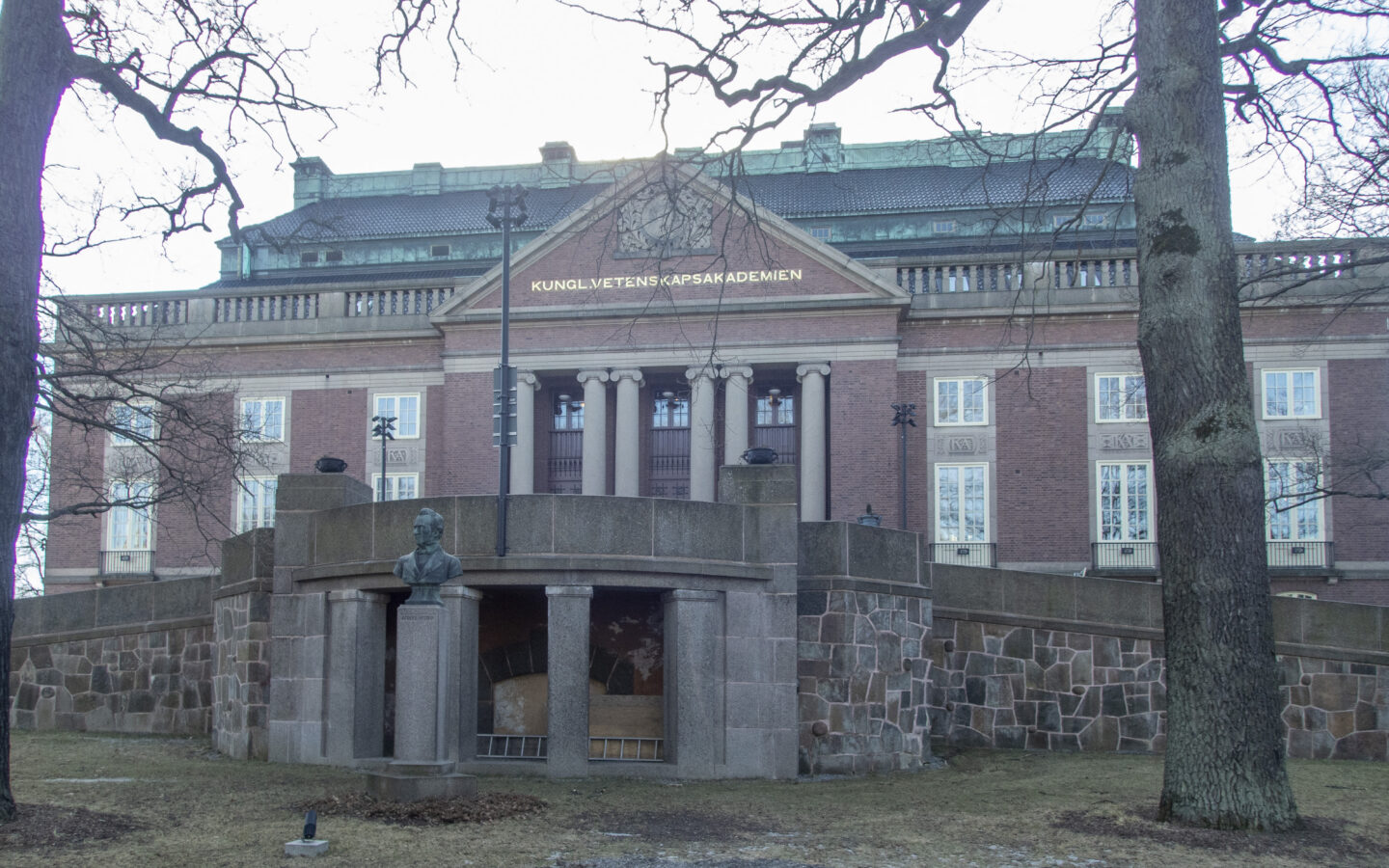
American economists Robert E. Hall and Michael Woodford have won the 2026 Sveriges Riksbank Prize in Economic Sciences in Memory of Alfred Nobel for research on the microeconomic foundations of macroeconomic stabilization policy. The Royal Swedish Academy of Sciences said their work helped create the theoretical framework behind models now widely used by central banks and finance ministries to understand recessions, inflation and the effects of monetary and fiscal policy. The award, announced in Stockholm on Monday, is worth 12 million Swedish kronor and will be presented in December.
Why the prize matters
Macroeconomic policy often deals with enormous aggregates: inflation, output, unemployment and interest rates. Hall and Woodford helped connect those broad outcomes to the decisions of households and firms.
That approach made modern stabilization models more rigorous by asking how individual behavior changes when people expect future inflation, interest rates or income to move.
Hall changed how economists think about consumption
Robert Hall’s research on household consumption showed that spending decisions depend heavily on expectations about future income rather than only current income.
His work became an important building block for models used to study how consumers react to tax changes, recessions and shifts in interest rates.
Woodford reshaped monetary-policy analysis
Michael Woodford became one of the most influential economists in modern central banking through research on price-setting, expectations and monetary-policy communication.
His work helped explain why central banks can affect the economy not only through today’s interest rate, but also through what households and companies believe rates will be in the future.
Forward guidance became a practical policy tool
The idea of influencing expectations became especially important after the global financial crisis and during later periods when policy rates were close to zero.
Central banks increasingly used forward guidance to signal the likely future path of interest rates, hoping to influence borrowing, investment and spending before any actual policy move occurred.
New Keynesian models are now standard tools
The prize committee said the laureates’ work contributed to a paradigm shift in stabilization policy. New Keynesian models combine forward-looking behavior with frictions such as prices and wages that adjust slowly.
These models are now central to the forecasting and scenario analysis used by many major central banks.
The research is highly relevant in 2026
The award comes during a period of renewed debate over inflation and monetary policy. Energy shocks, high public debt and geopolitical disruption have complicated central banks’ efforts to stabilize prices without causing deep recessions.
Hall and Woodford’s frameworks are directly connected to those questions because they examine how policy works when expectations and market frictions interact.
Central banks still face model limitations
The Nobel recognition does not mean modern macro models are perfect. Recent shocks have highlighted how difficult it can be to model supply-chain breakdowns, wars, pandemics and rapid technological change.
Critics argue that some standard models simplify financial instability or assume households and firms behave more predictably than they actually do.
Woodford’s ideas changed central-bank communication
In earlier decades, central banks often treated policy decisions and future intentions as closely guarded information. Modern monetary policy is much more communication-heavy.
Press conferences, projections and guidance are now treated as policy instruments in their own right. Woodford’s research helped provide the theoretical justification for that shift.
Hall’s work reached beyond consumption theory
Hall has also contributed to research on labor markets, business cycles and productivity. His work has repeatedly focused on how microeconomic behavior shapes broader economic fluctuations.
That long research record made him one of the most influential U.S. macroeconomists of his generation.
The award reflects a broader debate over stabilization
Governments and central banks are again being asked to respond to overlapping shocks: expensive energy, war, AI investment booms and high debt.
Those challenges raise familiar questions about when policymakers should stimulate demand, when they should restrain it and how much credibility matters.
The prize is technically distinct from Alfred Nobel’s original awards
The economics prize was created by Sweden’s central bank in 1968 and first awarded in 1969. It is presented alongside the original Nobel Prizes but was not among the awards established by Alfred Nobel’s will.
It is nevertheless administered through the Nobel system and selected by the Royal Swedish Academy of Sciences.
Award ceremony set for December
Hall, affiliated with Stanford University, and Woodford, affiliated with Columbia University, will formally receive the prize in December.
Their selection places stabilization policy at the center of this year’s economics Nobel message. At a time when policymakers face repeated global shocks, the committee emphasized the value of models that connect individual decisions, expectations and economy-wide outcomes.
Sources
- Royal Swedish Academy of Sciences / Nobel Prize announcement
- Reuters, Oct. 12, 2026
- Independent international coverage of the Nobel announcement