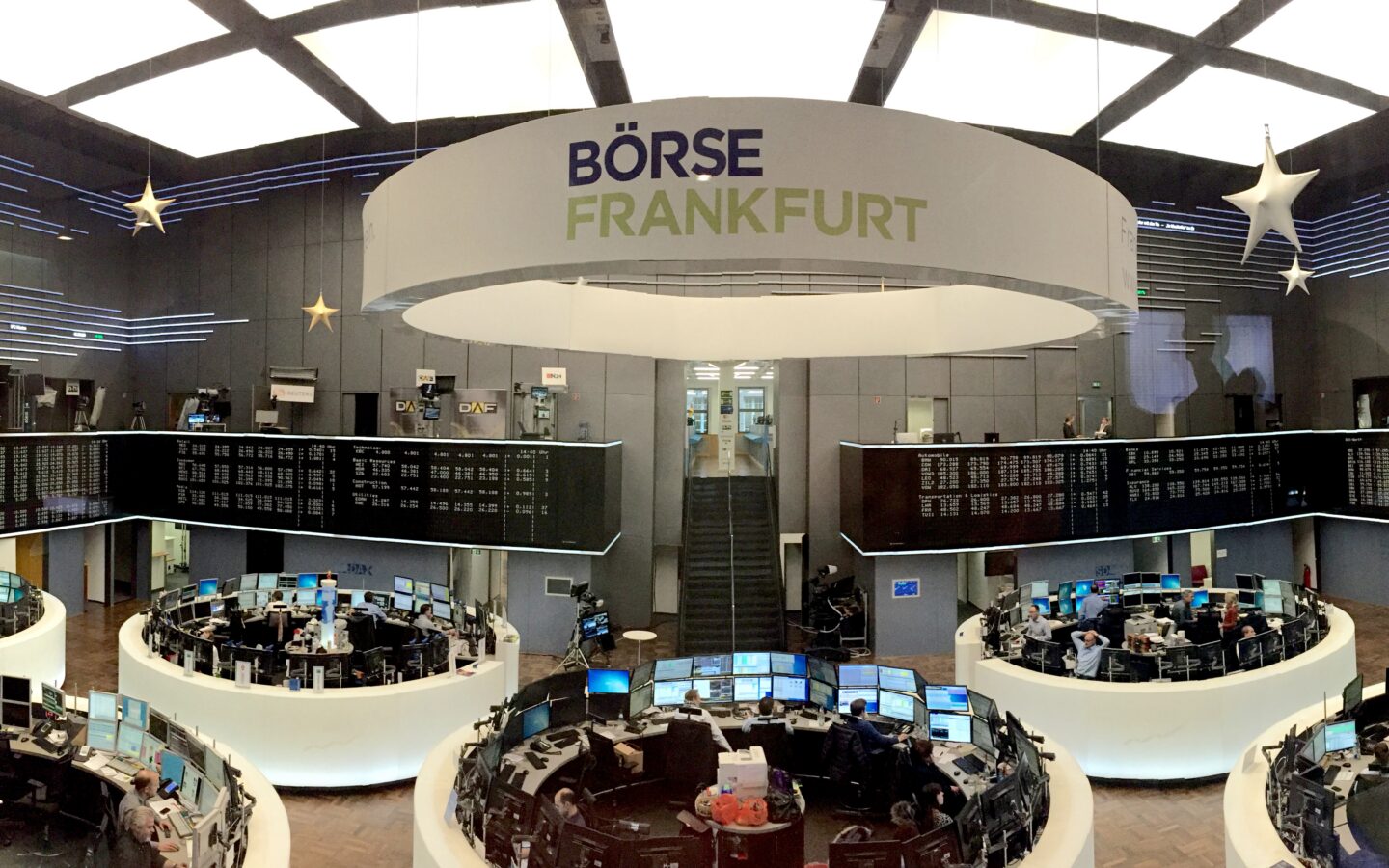
Global stock markets finished Friday on firmer ground even as investors continued to navigate oil prices near $104 a barrel, U.S. Treasury yields above 5% and growing questions about the cost of financing the artificial-intelligence boom. The S&P 500 and Nasdaq each rose roughly 0.6%, European shares recovered and most major Asian markets also gained. The positive close did not eliminate the week’s underlying concerns; instead, it showed that investors are willing to keep buying equities while waiting for a dense calendar of earnings reports, inflation data and central-bank decisions.
Wall Street ends the week with gains
All three major U.S. indexes advanced on Friday. Technology stocks remained central to the market’s direction, but participation was uneven. Some chip companies weakened as investors reconsidered the amount of external financing required to build data centers, buy advanced processors and expand AI services. Telecom shares also fell after SpaceX’s spectrum acquisition raised concerns that satellite-based mobile services could become a more direct competitor to traditional wireless carriers.
Despite those sector losses, the broader market held up. Investors appear to be giving large technology companies the benefit of the doubt because their balance sheets are stronger than many other sectors and they remain the primary beneficiaries of AI spending. That concentration is both a source of support and a risk: disappointing earnings from a handful of mega-cap companies could have an outsized effect on the indexes.
Bond yields remain the market’s biggest valuation challenge
The U.S. 10-year Treasury yield was around 5.26% on Friday, near levels not seen in decades. Higher government yields matter because they influence nearly every other asset price. When investors can earn more than 5% on highly liquid U.S. government debt, they demand a higher expected return before buying expensive stocks, real estate or corporate bonds.
This is particularly important for companies whose profits are expected far in the future. AI infrastructure businesses, renewable-energy developers and other capital-intensive growth sectors often need years of investment before producing mature cash flow. Higher discount rates reduce the present value of those future profits and make debt financing more expensive.
Oil is still high even after the immediate panic eased
Brent crude settled near $104 a barrel. Prices had fallen from earlier highs after President Donald Trump said the United States would not attack Iran before the midterm elections and after Washington announced a deal allowing Russian diesel supplies. Even so, energy remains much more expensive than it was before the latest wave of Middle East conflict.
High oil prices create several simultaneous effects. Energy companies earn more, which supports their shares. Consumers and manufacturers pay more for fuel, reducing disposable income and profit margins elsewhere. Central banks also worry that expensive energy will push inflation higher, making it harder to lower interest rates. Those crosscurrents help explain why markets can rise even while investors remain uneasy.
Europe recovered, but telecom stocks were hit hard
The STOXX 600 rose about 1% on Friday, enough to erase its weekly decline. Lower oil prices earlier in the session and a pullback in some European bond yields helped risk appetite. But the telecom sector fell sharply after SpaceX acquired a nationwide low-band spectrum portfolio in the United States.
Deutsche Telekom suffered one of its biggest one-day declines in years because of its large stake in T-Mobile US, which also dropped sharply. Vodafone, Telefonica and Orange weakened as investors considered whether satellite-to-phone services could eventually erode the economics of traditional mobile networks.
France remains a problem for European bonds
European government-bond markets calmed somewhat Friday, but France remains a major source of risk. Investors are concerned about high public debt, budget deficits and political uncertainty ahead of the presidential election. The spread between French and German borrowing costs has widened substantially, signaling that investors are demanding more compensation to hold French debt.
That matters for European equities because rising government yields increase financing costs across the economy. Companies borrowing for expansion pay more, households face higher mortgage rates and governments have less room for fiscal stimulus. If bond stress intensifies, it could become a direct threat to economic growth.
The euro had another difficult week
The single currency weakened for a fifth consecutive week and touched a 17-month low during the recent selloff. Part of the pressure comes from the contrast between the U.S. economy and weaker European fiscal conditions. Investors also worry that Europe is more exposed to imported energy shocks.
A weaker euro can help European exporters because their products become cheaper abroad, but it also makes imported energy and commodities more expensive. That is another reason the European Central Bank must pay close attention to currency moves while assessing inflation.
Gold benefited from uncertainty
Gold rose about 1.5% to around $4,193 an ounce, supported by a slightly softer dollar and demand for assets perceived as safer during geopolitical and financial stress. The metal’s strong performance reflects a market where investors are simultaneously buying stocks and maintaining hedges against inflation, war and sovereign-debt risk.
That combination is not necessarily contradictory. Portfolio managers can remain optimistic about corporate earnings while still protecting against tail risks. The unusually high level of gold suggests uncertainty remains elevated even when equity indexes are close to records.
Next week will test the rally
The next major test comes from U.S. bank earnings and inflation data. Goldman Sachs, JPMorgan, Wells Fargo and other large financial institutions are scheduled to report results. Bank earnings can reveal how high interest rates are affecting consumers, credit quality, trading revenue and dealmaking.
Inflation data will be equally important. If price pressures remain strong, particularly because of energy, investors may raise expectations for another Federal Reserve rate increase. That would likely push bond yields higher again and challenge expensive equity valuations.
AI financing is becoming a market-wide issue
One of the week’s most important themes was the realization that AI infrastructure may require enormous external financing. Morgan Stanley has estimated that the sector could need roughly $1.5 trillion of outside capital by 2028. Companies including SpaceX, Broadcom and Oracle are expected to raise billions to buy chips and build infrastructure.
As long as AI-related revenue grows rapidly, investors may be willing to provide that capital. But the combination of high yields and uncertain returns means financing will become more selective. Friday’s market gains suggest investors are not abandoning the AI trade, but they are demanding clearer evidence that spending will translate into durable profits.
A positive close, not a resolution
Friday’s advance ended the week on an optimistic note, but none of the market’s central problems disappeared. Oil remains expensive, bond yields are historically high, Europe faces fiscal pressure and AI investment is becoming harder to finance. Equity markets are effectively betting that corporate earnings can remain strong enough to absorb those headwinds.
The coming week will provide the first major evidence. If banks report healthy profits and inflation data show stabilization, the rally could broaden. If inflation surprises higher or earnings disappoint, the same high yields that investors tolerated Friday could quickly become a larger obstacle. Global markets finished the week higher, but the balance between earnings optimism and financing stress remains unusually fragile.


Sources
- Major global exchange and government-bond market data
- Reuters global markets coverage, Oct. 9, 2026
- Central-bank and commodity-market data