
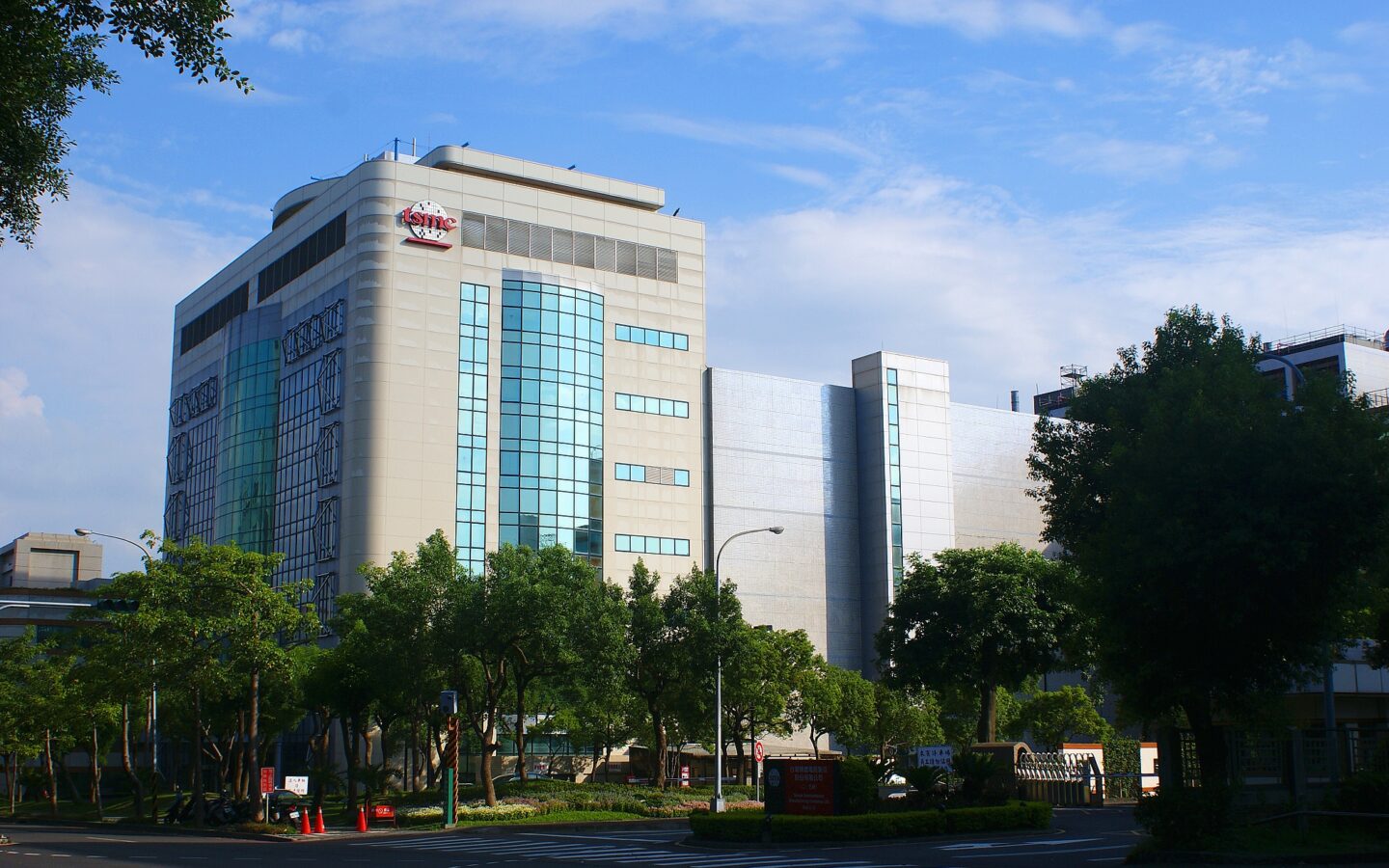
Taiwan Semiconductor Manufacturing Co. reported a record third-quarter profit as demand for artificial-intelligence chips continued to push the world’s largest contract chipmaker to new highs. TSMC said net profit reached T$763.1 billion, or roughly $23.6 billion, for the July-September quarter, up 69% from a year earlier and above analysts’ expectations. The result reinforced the company’s central role in the AI infrastructure boom even as higher interest rates and concerns about technology valuations triggered a broader global selloff in semiconductor shares.
AI demand remains the main engine
TSMC manufactures advanced processors for many of the world’s largest technology companies, including Nvidia and Apple. Demand for AI accelerators, data-center processors and high-performance computing products has kept utilization high at the company’s most advanced factories.
The company said AI-related demand continues to exceed supply in several categories, supporting both pricing power and capital investment.
Record profit beat expectations
The T$763.1 billion profit exceeded the LSEG SmartEstimate of roughly T$746 billion. Revenue growth remained strong as customers continued ordering leading-edge chips built on advanced process nodes.
That performance is particularly notable because many consumer-electronics markets remain more cautious than the AI segment.
TSMC is still cautious about 2027
Management struck a more measured tone on the outlook for 2027, pointing to macroeconomic uncertainty and higher component costs. Consumer and price-sensitive markets could weaken if financing costs remain elevated.
The contrast between strong AI demand and softer mass-market electronics is becoming one of the defining features of the semiconductor cycle.
Capital spending remains enormous
TSMC maintained its 2026 capital-spending outlook at $60 billion to $64 billion. The company is investing heavily in Taiwan and overseas as customers seek more capacity and governments push for geographically diversified chip production.
Such spending is necessary because advanced semiconductor fabs can cost tens of billions of dollars and take years to build.
Arizona expansion is progressing
Construction of TSMC’s second Arizona factory has been completed, with production expected to begin in the third quarter of 2027. The U.S. expansion is part of a broader effort to place more advanced manufacturing closer to major American customers.
The company is also evaluating additional U.S. investment, including possible expansion in Texas.
Investors are questioning valuations
Despite the strong results, TSMC shares fell amid a broader technology selloff. Hotter-than-expected U.S. inflation data raised expectations for higher interest rates, pressuring richly valued technology stocks.
The market reaction shows that even strong earnings may not be enough to offset concerns about financing costs and valuation.
AI infrastructure depends heavily on TSMC
Most of the world’s leading AI chip designers rely on TSMC for manufacturing. That makes the company a critical bottleneck in the global AI supply chain.
Any capacity constraint or production disruption can affect data-center expansion plans far beyond Taiwan.
Geopolitics remain a structural risk
Taiwan’s geopolitical position means investors continually assess the security risk surrounding TSMC. The company’s overseas investments aim partly to reduce concentration, although its most advanced capabilities remain heavily centered in Taiwan.
Advanced packaging is another constraint
AI processors require sophisticated packaging technologies in addition to advanced wafers. TSMC has been expanding packaging capacity because demand for high-bandwidth memory integration and chiplets has increased rapidly.
Customer concentration matters
Large AI customers account for an increasing share of advanced-node demand. That creates strong growth but also raises concentration risk if hyperscalers slow spending.
The bigger question is sustainability
TSMC’s record result confirms that AI investment remains exceptionally strong. The question for investors is whether customers can monetize that infrastructure quickly enough to justify continued capital spending. For now, TSMC is benefiting from the buildout regardless of which AI platform ultimately wins.
Sources
- TSMC quarterly results
- Reuters, Oct. 15, 2026
Another issue is whether AI demand broadens beyond a handful of hyperscalers. If more enterprises begin deploying large-scale inference workloads, semiconductor demand could become less dependent on a small group of technology giants. That would make the current investment cycle more durable.
TSMC’s record quarter therefore carries significance beyond one company. It is one of the clearest indicators available of how much real capital is still flowing into the AI infrastructure buildout.
Supply-chain resilience will remain another major issue. Advanced chip production depends on specialized chemicals, equipment and packaging capacity sourced from multiple countries. Any disruption in those inputs can constrain output even when customer demand remains strong.
That is why TSMC’s cautious language about 2027 matters. The company is not signaling a collapse in AI demand; it is warning that strong demand alone does not eliminate macroeconomic, geopolitical or supply risks.


