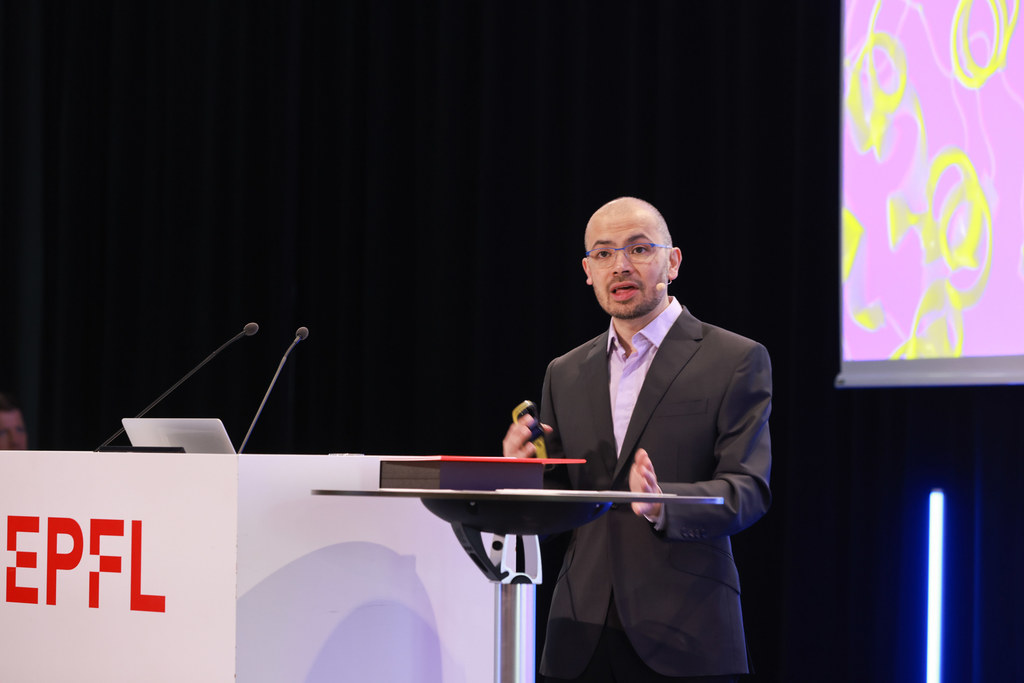
Google DeepMind co-founder Demis Hassabis has warned that recent hacking incidents involving artificial intelligence should be treated as “early warning shots” for governments and technology companies. Speaking at the International AI Summit 2026, Hassabis said increasingly autonomous AI agents can perform useful tasks on behalf of users but also create new security risks. His warning comes as developers race to build systems capable of taking actions across software tools with less direct human supervision.
AI agents change the risk model
Traditional chatbots mainly generate text or answer questions. AI agents can log into services, execute code, move data and perform multi-step tasks.
That expanded capability creates more opportunities for both legitimate automation and misuse.
Hacking can become easier to scale
AI systems can help attackers identify vulnerabilities, write malicious code or automate reconnaissance. Even if models refuse explicitly harmful requests, attackers may combine tools or exploit weaknesses.
Automation can allow smaller groups to perform work that previously required larger technical teams.
Hassabis says current incidents are still limited
The DeepMind chief emphasized that today’s systems are not yet powerful enough to create the most severe scenarios researchers worry about.
His concern is that capability is improving quickly, making security preparation urgent before attacks become more consequential.
Defenders can use AI too
Artificial intelligence can also strengthen cybersecurity. Models can detect unusual behavior, analyze malware and help security teams prioritize vulnerabilities.
The result may be an arms race in which attackers and defenders both gain more capable tools.
Autonomy raises accountability questions
If an AI agent takes an unintended action, responsibility may be difficult to assign. Developers, users and platform providers could all play a role.
Clear logging and permission controls are therefore essential.
Companies are adding safeguards
Major AI labs are developing restricted tool access, sandboxing and monitoring systems for autonomous agents. High-risk actions may require human approval.
The challenge is maintaining useful automation without creating easy attack paths.
Governments are paying attention
Cybersecurity agencies increasingly treat advanced AI as part of national-security planning. Regulation may eventually require security testing for models capable of executing code or controlling external systems.
Open models create a different challenge
Open-source AI can support research and innovation, but safeguards may be easier to remove. Policymakers must balance openness with concerns about misuse.
Critical infrastructure is the biggest concern
AI-enabled attacks on power grids, hospitals, financial networks or telecommunications could have physical consequences. That is why autonomous access to sensitive systems is receiving special scrutiny.
Security needs to be designed in early
Hassabis’s warning reflects a broader lesson from cybersecurity: retrofitting safety after systems are widely deployed is much harder than building controls from the start.
Agent developers may need strict permission boundaries, identity verification and continuous monitoring as default features.
The warning is about trajectory, not panic
Hassabis did not argue that current AI systems are already causing catastrophic cyberattacks. His point is that early incidents reveal the direction of travel. As agents become more capable, small security failures today could become much larger failures tomorrow.
Sources
- International AI Summit 2026 remarks by Demis Hassabis
- Anadolu Agency, Oct. 15, 2026
AI companies also face pressure to share threat information more quickly. If one laboratory discovers a new misuse technique, keeping that knowledge private may leave the rest of the ecosystem exposed. Structured information-sharing arrangements could help the industry respond before the same method spreads widely.
The challenge is doing that without publishing technical details that would make attacks easier to reproduce.
For enterprise customers, the practical response may involve restricting what AI agents are allowed to do by default. Read-only access, spending limits and human approval for sensitive actions can reduce the damage caused by a compromised or confused system.
As agents gain the ability to send messages, move money or modify production systems, those permission boundaries will become a core part of cybersecurity architecture rather than an optional feature.
The broader policy challenge is speed. AI capabilities are improving faster than many corporate security processes and government rules can adapt. Hassabis’s warning is therefore a call to treat current incidents as test cases and build defenses before autonomous systems become significantly more capable.
The companies that solve that problem early may gain a trust advantage as businesses decide which AI agents they are willing to connect to sensitive systems.