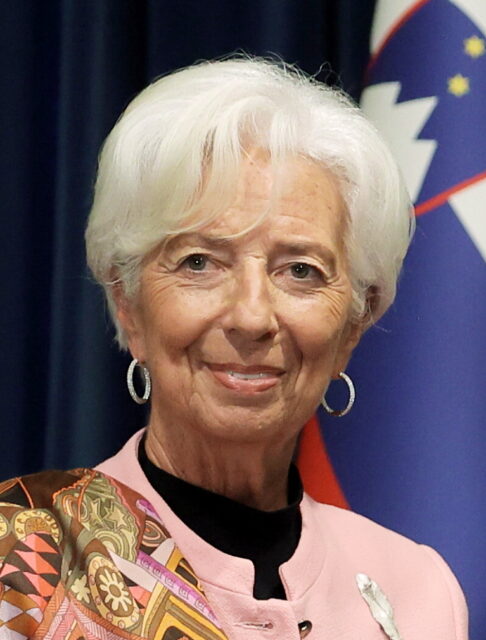
The European Central Bank left its three key interest rates unchanged at its October meeting, pausing after earlier tightening as policymakers assess the effects of a renewed energy shock. The deposit rate remains at 2.50%, the main refinancing rate at 2.65% and the marginal lending rate at 2.90%. ECB President Christine Lagarde nevertheless indicated that a new increase in December remains possible if inflation risks continue to intensify.
The ECB chose to pause
The decision was broadly expected by markets. Policymakers are trying to judge whether rising energy prices will create persistent inflation or mainly slow economic growth.
Keeping rates unchanged gives the ECB more time to assess incoming data.
Energy prices are the central problem
Middle East tensions have pushed oil and refined fuel prices higher, increasing costs for households and businesses across Europe.
The ECB said energy prices remain an upside risk to inflation and a downside risk to growth.
Lagarde kept December open
Lagarde said policymakers are not ruling out another rate increase before the end of the year. Markets are increasingly pricing the possibility of a December move.
The decision will depend on inflation data, wage growth and financial conditions.
Europe faces a difficult winter
High electricity and heating costs remain a major political and economic concern. European Commission officials have warned that tens of millions of people already struggle to heat their homes adequately in a normal year.
A renewed energy shock could increase that burden.
Higher rates also carry costs
Borrowing costs have risen for households, companies and governments. Additional rate increases would put more pressure on mortgages, corporate investment and public finances.
That is particularly sensitive in countries with high debt or fragile growth.
French fiscal concerns add another complication
Political and budget uncertainty in France has contributed to volatility in European bond markets. Higher sovereign yields can tighten financial conditions even without an ECB rate increase.
The central bank therefore has to consider both inflation and market stability.
Lagarde’s departure adds leadership uncertainty
Lagarde has informed European leaders that she intends to leave the ECB in February 2027, earlier than the formal end of her term.
That means the institution could face an important policy transition while inflation remains elevated.
The euro-area economy is uneven
Some countries continue to grow, while manufacturing-heavy economies remain under pressure from weak external demand and high energy costs.
A single interest-rate policy must address very different national conditions.
Markets will focus on November data
Inflation reports, wage indicators and business surveys over the next several weeks will shape expectations for the December meeting.
If energy inflation spreads into services and wages, the case for another hike will strengthen.
The pause does not mean the cycle is over
The October decision should be seen as a pause rather than a declaration that tightening is finished. Lagarde’s comments were deliberately conditional.
For households and businesses, the key message is that borrowing costs may remain high for longer—and could still rise again before the end of the year.
Sources
- European Central Bank monetary policy decision, Oct. 29, 2026
- Anadolu Agency, Oct. 29, 2026
- CNBC-e and Investing.com, Oct. 29, 2026
December could become a defining meeting
If inflation remains elevated and wage growth proves sticky, the ECB may decide that waiting longer risks losing credibility. If growth weakens sharply, officials could instead keep rates unchanged despite uncomfortable inflation. The December meeting therefore has unusually high stakes because both sides of the mandate are under pressure.
Markets will also watch how the ECB explains any decision during a leadership transition. Clear communication will be essential to prevent investors from interpreting personnel changes as a shift in the institution’s commitment to price stability.
Inflation expectations remain crucial
Central banks worry most when temporary price shocks change the behavior of households and companies. If workers begin demanding larger wage increases and businesses raise prices in anticipation of future energy costs, a temporary oil shock can become more persistent. Survey-based inflation expectations and negotiated wages will therefore be important before December.
The ECB will also compare market-based inflation measures with actual price data. A policy mistake in either direction could be costly: tightening too much could deepen the slowdown, while waiting too long could allow inflation to become harder to reverse.