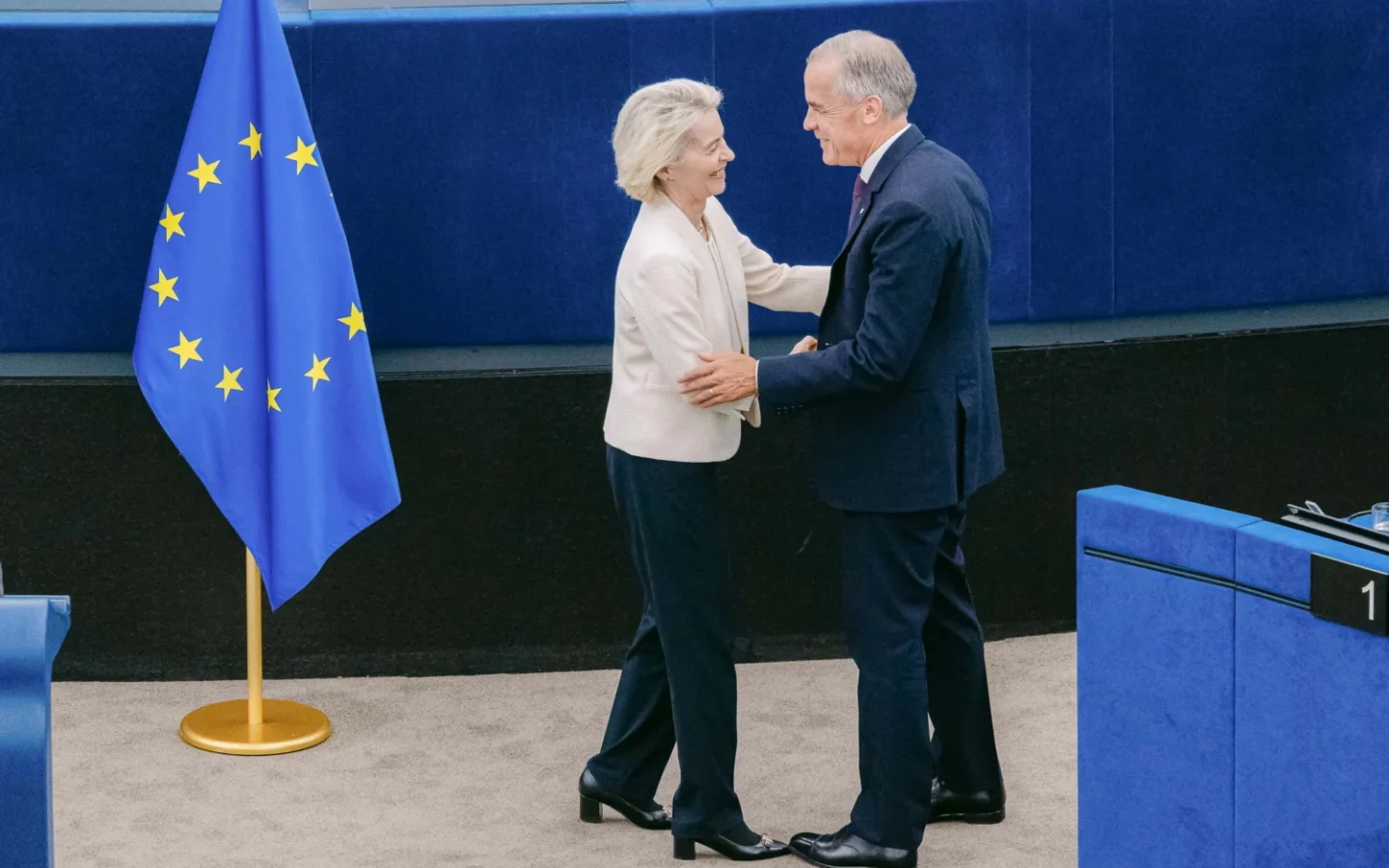
Canada and the European Union moved toward deeper economic and security cooperation at a summit in Montreal, but stopped short of endorsing a proposed ‘associate member’ status for Canada. The disagreement over terminology underscores a larger question: how closely the two partners can align without creating a new category of European Union membership.
Shared goals, different ideas about a label
European Commission President Ursula von der Leyen has promoted an association short of formal accession. Canadian Prime Minister Mark Carney has emphasized practical cooperation and greater economic sovereignty, while some European governments have raised concerns that an associate-membership concept lacks a clear legal basis.
Reuters reported that the phrase was left out of a joint declaration, which instead supported an ever closer association. The decision did not halt talks on a more ambitious relationship; it reflected a choice to move forward on policy while leaving institutional questions unresolved.
Trade and technology top the agenda
Leaders discussed broader cooperation in artificial intelligence, critical minerals, energy, research, supply chains and security. Canada could seek greater access to European research and high-performance computing initiatives, while Europe has a strategic interest in a stable source of energy and materials necessary for advanced manufacturing.
Student exchanges, scientific collaboration and digital trade were also on the agenda. A deeper partnership could help companies on both sides navigate regulatory systems and encourage investment in new technologies.
Reducing reliance on the United States
U.S. trade policy has become a central driver of Canada’s effort to diversify commercial relationships. According to figures cited by the Associated Press, the United States received 71.7% of Canada’s merchandise exports in 2025. That concentration makes changes to American tariffs and trade rules particularly consequential for Canadian businesses.
Canada is seeking stronger ties elsewhere, but shifting trade networks takes time. Transportation costs, market access, domestic regulations and business relationships all influence how quickly companies can diversify.
What happens after Montreal?
The summit established a direction rather than a finished institutional agreement. Officials are expected to continue defining the relationship ahead of future meetings, including how proposed programs could work in practice.
For now, the clearest result is political: Canada and Europe want closer cooperation, but the legal language of that relationship remains unsettled. The test will be whether forthcoming agreements create measurable gains in investment, research and trade.
Sources: Associated Press, October 30; Reuters, October 29; Le Monde, October 30.