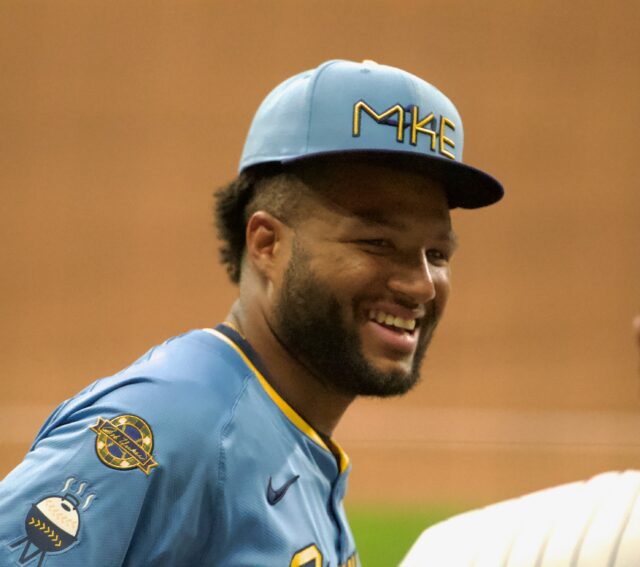
The Milwaukee Brewers won the first World Series championship in franchise history, defeating the Tampa Bay Rays 4-1 in Game 5 and ending a 57-season wait for a title. Milwaukee took the series in five games and completed a dominant postseason in which it won 11 of 13 games. Rookie Cooper Pratt drove in two runs, Jacob Misiorowski delivered 5 2/3 scoreless innings and catcher William Contreras was named World Series MVP.
A franchise milestone
The Brewers had reached the World Series only once before, losing to the St. Louis Cardinals in 1982.
The 2026 title therefore represents the biggest achievement in the club’s history.
Misiorowski controlled Game 5
Jacob Misiorowski allowed only two hits and one walk while keeping Tampa Bay scoreless for 5 2/3 innings.
He left with a calf cramp, but the Milwaukee bullpen protected the lead.
Cooper Pratt set a rookie record
Pratt drove in two runs and extended a remarkable hitting streak across Games 4 and 5.
Reuters reported that his six consecutive hits set a World Series record for a rookie.
Contreras earned MVP honors
William Contreras hit .381 during the series and drove in four runs. His RBI double in Game 5 helped Milwaukee extend its advantage.
His production from the catcher position was a major part of the Brewers’ offensive consistency.
The Rays could not generate enough offense
Tampa Bay struggled to create sustained pressure against Milwaukee’s pitching staff. Starter Drew Rasmussen allowed one run over four innings, keeping the game close early.
But the Rays could not capitalize before the Brewers added insurance runs.
Milwaukee’s postseason was remarkably efficient
Winning 11 of 13 playoff games requires both depth and consistency. Milwaukee received contributions from its rotation, bullpen and younger position players.
The team rarely needed dramatic late comebacks because it controlled many games from the middle innings.
Pitching depth proved decisive
October baseball often exposes teams that rely too heavily on one or two starters. Milwaukee’s ability to cover innings with multiple effective pitchers reduced that vulnerability.
Trevor Megill closed Game 5 after Tampa Bay scored once in the ninth.
The title validates a long-term development model
The Brewers do not operate with one of baseball’s largest payrolls. Their success has depended heavily on scouting, player development and efficient roster construction.
Winning the championship strengthens the argument that smaller-market teams can compete if they consistently develop pitching and young talent.
Tampa Bay’s wait continues
The Rays have now reached multiple World Series without winning a championship. Their own low-payroll development model has produced sustained competitiveness but not the final title.
The loss will renew questions about how the roster should evolve for 2027.
Milwaukee has a new place in baseball history
For generations of Brewers fans, the franchise had never experienced a championship celebration. That changed with the final out of Game 5.
The combination of rookie breakthroughs, elite pitching and postseason consistency turned the 2026 Brewers into the team that finally ended the wait.
Sources
- Major League Baseball postseason results
- Reuters, Oct. 29, 2026
For baseball more broadly, Milwaukee’s title adds another example of competitive balance in an era when payroll disparities remain large. The Brewers combined homegrown talent with targeted acquisitions rather than building around the sport’s biggest contracts. Their run will likely be studied by other mid-market teams looking for ways to compete deep into October without matching the largest payrolls.
A defining October for a new generation
Pratt, Misiorowski and other younger Brewers did not simply contribute around veteran stars; they became central figures in the championship run. That matters for Milwaukee’s future because cost-controlled young players give the front office more flexibility to strengthen other parts of the roster.
The title also validates the organization’s willingness to trust inexperienced players in high-pressure situations. That confidence could shape roster decisions for years, particularly as the club tries to sustain success without dramatically increasing payroll.
Milwaukee’s title also gives the National League another recent champion built through a mix of player development and targeted additions. That model can be difficult to sustain because successful young players eventually become more expensive, but the championship creates flexibility in how the organization approaches the next competitive window. The 2027 season will begin with the Brewers no longer chasing legitimacy, but defending a standard they finally established.