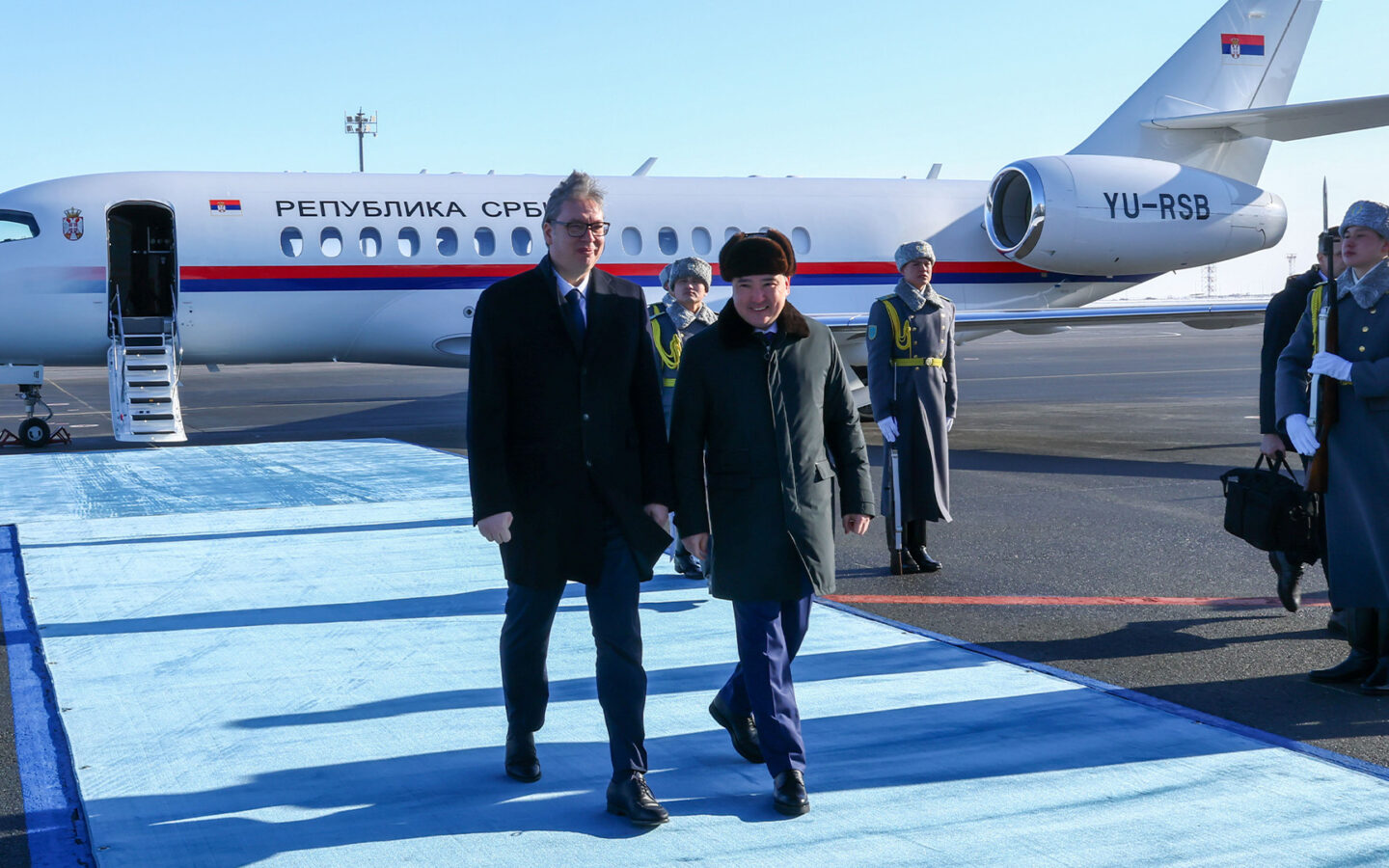
Serbia entered a new political era after a student-backed protest movement defeated the party of President Aleksandar Vucic in a parliamentary election that triggered celebrations across the country. Vucic, who has dominated Serbian politics for more than a decade as prime minister or president, now faces a dramatically weakened position. The result also carries wider geopolitical consequences because Serbia has balanced its European Union ambitions with close political, energy and security ties to Russia.
A protest movement turned into an electoral force
The winning movement grew out of months of student-led demonstrations and public frustration with corruption, governance and institutional accountability. Its ability to translate street mobilization into a parliamentary victory marks a major change in Serbian politics.
Vucic has dominated politics since 2014
Vucic has served as prime minister or president for most of the past 12 years. His political network built strong control over government institutions while maintaining a broad voter base through economic development and nationalist messaging.
The scale of the defeat surprised observers
Reuters described the result as a crushing loss for Vucic’s political camp. The size of the student-backed victory suggests dissatisfaction extended beyond urban protest movements into a wider portion of the electorate.
Russia quickly responded
The Kremlin praised Vucic’s contribution to Russian-Serbian relations and urged the incoming leadership to preserve cooperation with Moscow. Russia remains an important energy supplier to Serbia and has long cultivated political ties in Belgrade.
Serbia’s EU path is back in focus
Serbia is formally a candidate for European Union membership but has resisted joining EU sanctions against Russia. A new government may face pressure to align foreign policy more closely with Brussels if it wants faster progress toward membership.
The incoming movement still lacks governing experience
Winning an election and running a government require different skills. The student-backed coalition must now convert protest demands into economic, foreign-policy and institutional programs. Coalition building could become difficult if the movement includes groups with very different ideological priorities.
Energy policy will be one of the first tests
Serbia’s dependence on Russian energy gives Moscow continuing leverage. Any rapid shift away from Russia could carry economic costs unless alternative supplies and infrastructure are available.
Regional relations also matter
Serbia’s policies toward Kosovo, Bosnia and neighboring states remain among the most sensitive issues in the Balkans. A change in leadership could affect regional diplomacy even if the new government avoids abrupt shifts.
Vucic may remain influential
The election defeat does not necessarily remove Vucic from public life. He retains political networks and could become a strong opposition figure. How he responds to the transfer of power will help determine the stability of the transition.
Moscow faces another setback in Europe
The Serbian result follows the earlier defeat of Hungarian leader Viktor Orban, another European politician who maintained comparatively close ties with Moscow. For the Kremlin, losing sympathetic governments reduces political influence at a time when relations with Europe remain deeply strained.
Sources
- Reuters, Oct. 26, 2026
- Serbian election authorities and public statements
The transition will test institutions
Serbia’s next phase depends on whether the transfer of political power proceeds through institutions rather than confrontation. A peaceful transition would strengthen the credibility of the student-backed movement and reduce uncertainty for investors and EU partners.
Any dispute over results, appointments or control of state institutions could prolong political instability.
Economic policy may decide public support
After the celebrations, voters will judge the new leadership on wages, inflation, investment and public services. Reform promises could lose momentum quickly if living standards weaken. The coalition will therefore need to pair governance changes with a practical economic program.
Markets will watch the policy transition
Serbian assets could react not only to the election result but to the speed with which a governing coalition is formed. Investors typically prefer clarity on budgets, central-bank independence, infrastructure projects and relations with the European Union.
The new movement’s challenge will be to reassure markets that institutional reform does not mean policy paralysis. A credible cabinet and detailed economic program could reduce that risk quickly.
The durability of the new political order will ultimately depend on whether the coalition can preserve its broad protest alliance once difficult governing choices begin.
Foreign investors and neighboring governments will also watch whether the transition changes Serbia’s practical approach to regional security, infrastructure links and cross-border investment.