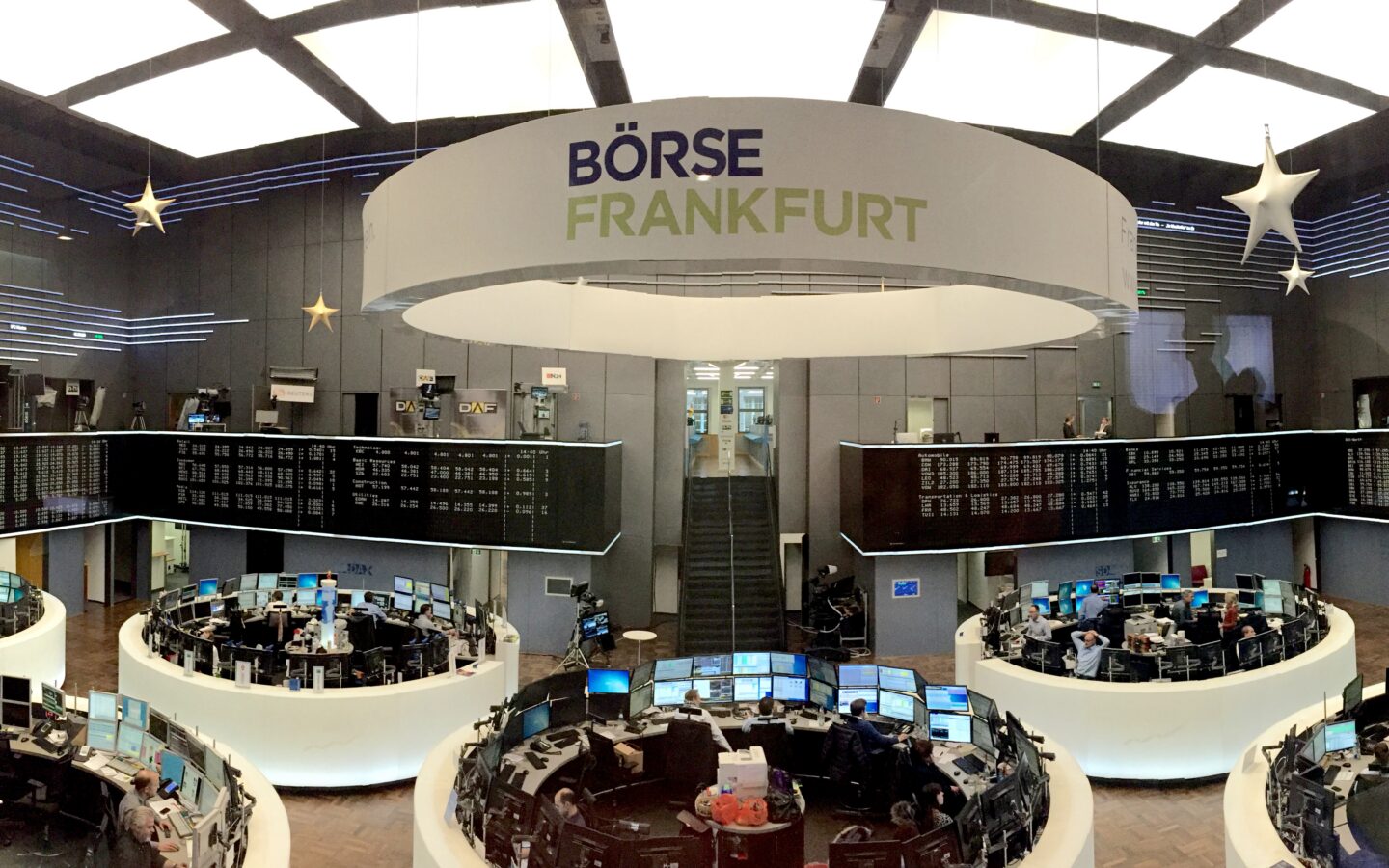
European equities closed higher on Monday as strength in banks outweighed concern over elevated oil prices and geopolitical risk. The STOXX 600 gained about 0.65% to 635.65 points, extending its advance for a second session. The banking index climbed roughly 1.5%, while Spain’s IBEX rose 1.33%. Investors are increasingly turning their attention to corporate earnings, hoping strong results can offset pressure from high energy prices, bond yields and weak consumer confidence.
Banks led the advance
European bank shares were among the strongest performers of the session. Higher interest rates can support bank margins when lending income rises faster than deposit costs.
Investors also see some European banks as cheaper than U.S. peers on valuation measures.
Oil remains a major macro risk
Brent crude remains above $100 a barrel amid conflict in the Middle East and uncertainty around global supply.
For Europe, which imports much of its energy, high oil prices threaten inflation and corporate margins.
Spain outperformed
The IBEX gained more than 1%, supported by its large banking sector.
Spanish banks have benefited from strong margins and relatively resilient domestic credit quality.
Earnings season moves into focus
Investors are beginning to shift attention from macro shocks to third-quarter company results.
Strong earnings could justify current valuations, while weak guidance could quickly reverse recent gains.
Luxury stocks remain under scrutiny
LVMH reported weaker-than-expected third-quarter sales, adding to concern about demand from Chinese consumers.
Despite that disappointment, the broader luxury sector finished higher, suggesting investors had already priced in some weakness.
China remains important for Europe
European automakers, luxury companies and industrial groups all depend heavily on Chinese demand.
Slower growth and stronger local competition in China are therefore affecting multiple sectors simultaneously.
Bond yields have eased slightly
Euro-zone bond yields dipped modestly after a period of sharp increases. Lower yields can support equity valuations by reducing discount rates.
However, yields remain elevated compared with recent years.
The ECB is expected to remain cautious
Markets expect the European Central Bank to keep rates unchanged at its October meeting.
Persistent energy inflation makes aggressive easing difficult, even as parts of the economy show weak growth.
Telecom stocks underperformed
Telecommunications companies were among the weaker sectors, reflecting investor concern over capital spending and competitive pressure.
High debt levels make the sector particularly sensitive to interest rates.
Industrial names found support
Companies including Nordex and Vallourec gained on company-specific developments.
Renewable-energy and infrastructure spending continue to support parts of the industrial sector despite broader economic uncertainty.
European banks may keep attracting capital
If earnings remain strong and credit losses stay contained, European banks could continue to benefit from investors seeking alternatives to expensive U.S. technology stocks.
The sector’s performance will depend heavily on the economic outlook and the path of ECB policy.
A fragile but positive session
Monday’s rise does not remove the risks facing European markets. Oil, geopolitics and high borrowing costs remain significant headwinds.
But the fact that banks and selected cyclicals could outweigh those pressures shows that investors are still willing to buy earnings strength rather than retreat completely from risk.
Sources
- Reuters, Oct. 12, 2026
- STOXX and LSEG market data
Sector rotation remains the key theme
The session showed how European equities can absorb an energy shock when financials and selected industrial names provide enough support. Investors are effectively rotating rather than abandoning risk altogether. That makes sector leadership more important than the headline index move.
If crude remains near elevated levels, airlines, chemicals and other energy-intensive businesses may face margin pressure. Banks could continue to benefit from higher rates, but only as long as credit quality remains stable. The next major test will come from earnings guidance and fresh inflation data.
Another factor is valuation. European equities still trade at lower multiples than many U.S. peers, which can attract investors when earnings remain resilient. That cushion, however, can disappear quickly if energy prices begin to erode corporate margins. The market’s ability to hold gains will therefore depend on whether banks and defensives can continue offsetting weakness in cyclicals.
Currency moves may provide an additional signal. A weaker euro can support exporters, but it also makes dollar-priced energy more expensive. That creates a mixed backdrop in which industrial exporters and domestic consumers can experience very different effects from the same market move.