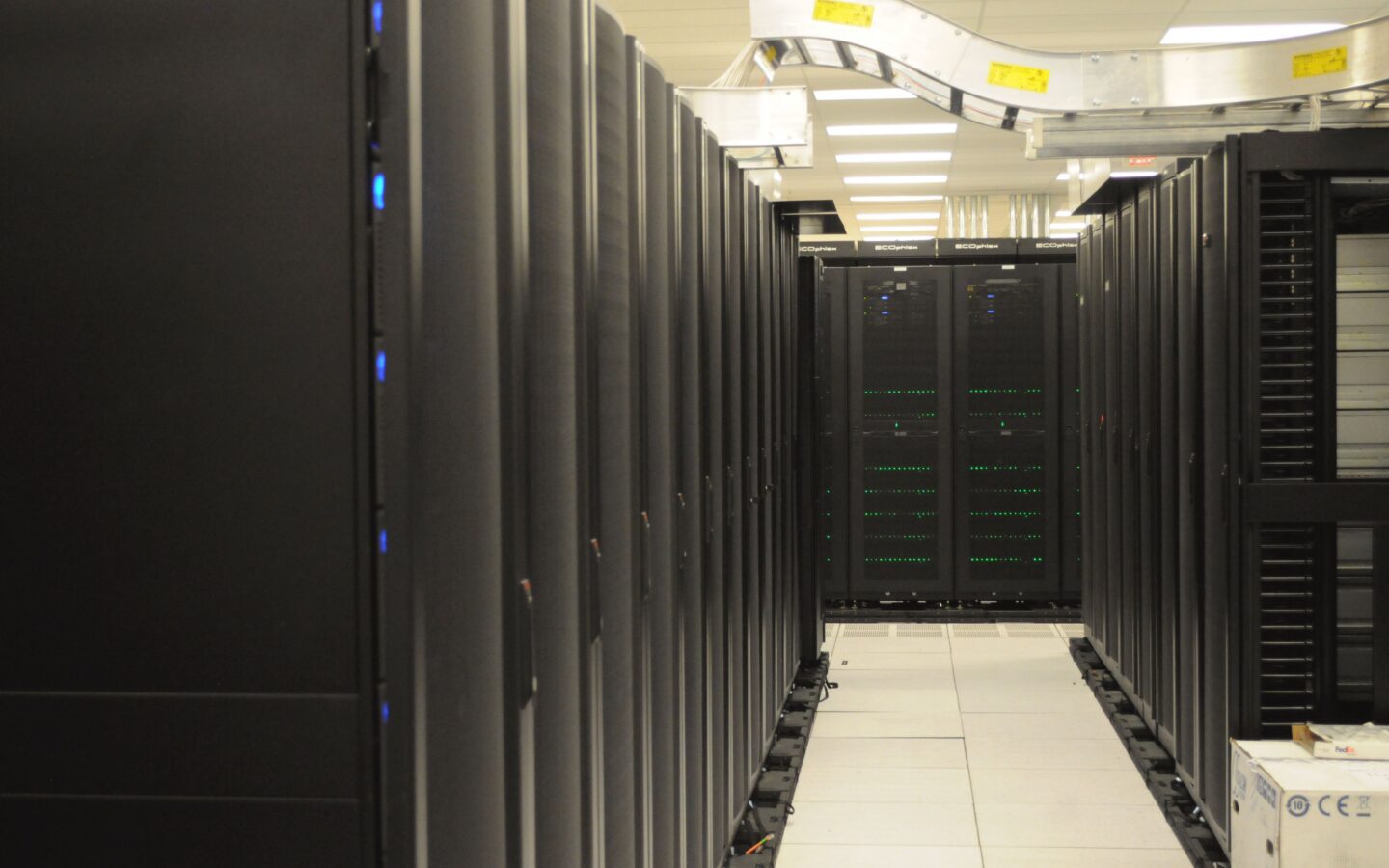
French cloud provider Scaleway plans a Copenhagen AI computing site using Nvidia HGX B300 systems as it expands European infrastructure.
A new computing site for European customers
French cloud provider Scaleway said on October 13, 2026 that it plans to open an artificial intelligence computing site in Copenhagen powered by Nvidia technology. The facility will use the Nvidia HGX B300 system, designed for demanding AI workloads. The announcement came alongside a separate plan for an AMD-powered supercomputer in Sweden, giving the company two new northern European expansion projects on the same day. Scaleway is targeting organizations seeking high-performance computing resources while keeping their workloads hosted under European Union legal frameworks.
Why Copenhagen was selected
Scaleway cited Denmark’s technology ecosystem, access to relatively low-carbon electricity and cool climate as reasons for choosing Copenhagen. Data centers consume substantial electricity not only to run processors but also to remove the heat generated by computing equipment. Cooler outside temperatures can reduce the energy required for certain cooling systems, although actual savings depend on facility design and operating conditions. Reliable power infrastructure and proximity to customers also matter. The company did not present the site as a guarantee of zero environmental impact, and its final energy profile will depend on deployment details.
The role of Nvidia’s HGX B300 platform
The planned systems are based on Nvidia’s HGX B300 architecture, which brings together accelerators and supporting components for AI training and inference. Such platforms are designed to process large workloads in parallel, a requirement for many modern machine-learning applications. However, headline chip capability does not automatically translate into equivalent performance for every customer. Networking, storage, software optimization and the nature of the workload all influence results. Customers evaluating cloud capacity will ultimately compare usable performance, price, reliability and service availability rather than chip branding alone.
European data sovereignty is a selling point
Organizations handling sensitive commercial or public-sector information increasingly ask where their data is stored, which legal jurisdictions apply and who can access infrastructure. Hosting within the European Union can support compliance planning, but geography alone does not establish compliance with every privacy or cybersecurity obligation. Customers still need contractual safeguards, technical controls and appropriate data-processing arrangements. Scaleway’s pitch reflects a wider effort by European providers to offer an alternative to relying entirely on infrastructure operated by large US cloud companies. Competition may give buyers more deployment choices.
The Sweden announcement broadens the strategy
The Copenhagen project follows a separate announcement that Scaleway intends to build an AMD-powered supercomputer in Sweden. Using systems from more than one chip supplier may help a cloud provider address different customer needs and reduce dependence on a single hardware roadmap. It also introduces operational complexity because software stacks, performance characteristics and procurement arrangements can differ. The two projects should not be treated as identical facilities. Their capacities, schedules and commercial offerings will need to be evaluated individually once Scaleway publishes further technical specifications.
Who might use the infrastructure?
Potential customers include AI developers, research teams and businesses building applications that require accelerated computing. Public institutions may also be interested when they need services hosted within specific jurisdictions. Reuters reported that Scaleway already serves Danish customers including the City of Copenhagen and AI company Corti. That existing customer base may help the company understand local demand, but it does not establish that those organizations have committed to using the new facility. Commercial success will depend on service pricing, performance and long-term customer adoption.
Electricity remains a limiting factor
High-density AI infrastructure can place unusual demands on power delivery, cooling equipment and network connectivity. New capacity announcements therefore raise questions about grid connections, backup systems and operational efficiency. Even where electricity has a lower carbon intensity, demand growth can create planning challenges for utilities and local authorities. The relevant measure is not simply the number of installed processors but how effectively the facility turns electricity into useful computing output. Energy transparency and efficient utilization will be important as the expansion progresses.
A competitive market for AI capacity
The cloud market is increasingly divided among large hyperscale providers, specialized GPU infrastructure operators and regional companies emphasizing sovereignty or tailored service. Scaleway’s expansion places it in competition for customers that want powerful computing without necessarily building their own data centers. The business case will depend on whether demand remains strong enough to keep expensive accelerators well utilized. Short technology replacement cycles create another challenge: equipment can become less competitive before the full investment has been recovered. Pricing discipline and customer contracts will matter as much as technical ambition.
What the announcement does not establish
The company has described the planned site and its intended technology, but the Reuters report did not provide a definitive opening date, total investment amount or complete installed accelerator count. Those details should not be inferred from the product name. A project announcement is also different from a fully operational service with published uptime and pricing. Customers considering the facility will need confirmation of availability zones, supported software, security certifications and contractual service levels. Until those details emerge, the development is best understood as a strategic expansion plan.
The next milestones to watch
The most meaningful updates will be a construction and commissioning timetable, confirmed power arrangements, published service specifications and initial customer availability. Scaleway’s ability to operate Nvidia and AMD-based systems efficiently across northern Europe could strengthen its position in the regional AI market. The announcement also illustrates a broader trend: European businesses increasingly regard computing capacity, data location and energy sourcing as strategic decisions. Whether this translates into sustainable revenue will become clearer only when the sites begin serving customers at scale.
Sources
Featured image is an illustrative stock photograph, not a photograph of the specific facility or announcement.