
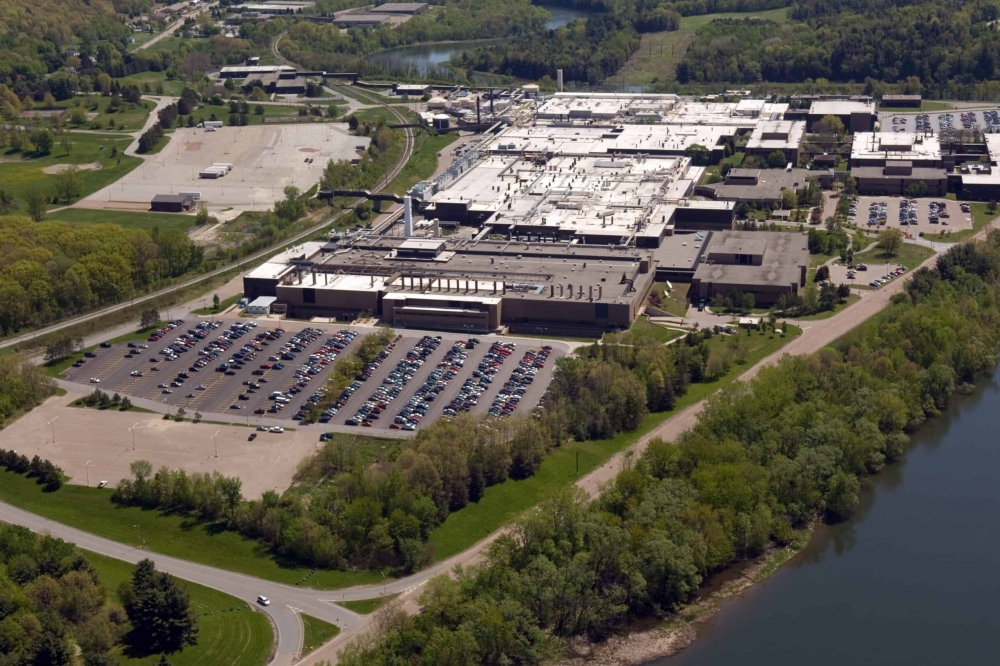
GlobalFoundries and Marvell Technology have expanded a multi-year manufacturing agreement aimed at increasing capacity for the high-speed optical components used in artificial-intelligence data centers. The agreement centers on GlobalFoundries’ silicon-germanium technology at its Burlington, Vermont, manufacturing site.
The companies say the added capacity will support next-generation pluggable optical transceivers, near-packaged optics and co-packaged optics. Those components move data between processors and computing racks, an increasingly important bottleneck as AI clusters grow larger.
AI performance depends on more than accelerators
Modern AI systems distribute workloads across thousands of processors. That means overall performance can be limited by how quickly data moves between chips, memory systems and server racks. GlobalFoundries and Marvell are betting that faster optical connections will become a larger part of the infrastructure required to scale training and inference.
The expanded agreement builds on GlobalFoundries’ broader push into silicon photonics and optical connectivity. Earlier this year, the company introduced its SCALE co-packaged optics platform, designed to improve bandwidth density and energy efficiency compared with traditional copper connections.
Manufacturing capacity becomes strategic
For Marvell, securing additional production capacity gives the company more room to supply networking and data-infrastructure customers as demand grows. For GlobalFoundries, the agreement reinforces the role of specialty semiconductor manufacturing in the AI supply chain, where not every critical component is built on the most advanced logic process node.
The partnership also highlights how the AI investment cycle is spreading beyond GPUs. Networking chips, optical modules, memory, power systems and cooling infrastructure are all attracting new capital as operators try to keep large computing clusters efficient and reliable.