The European Space Agency’s Jupiter Icy Moons Explorer is approaching Earth for a critical gravity-assist maneuver that will reshape its path toward Jupiter.
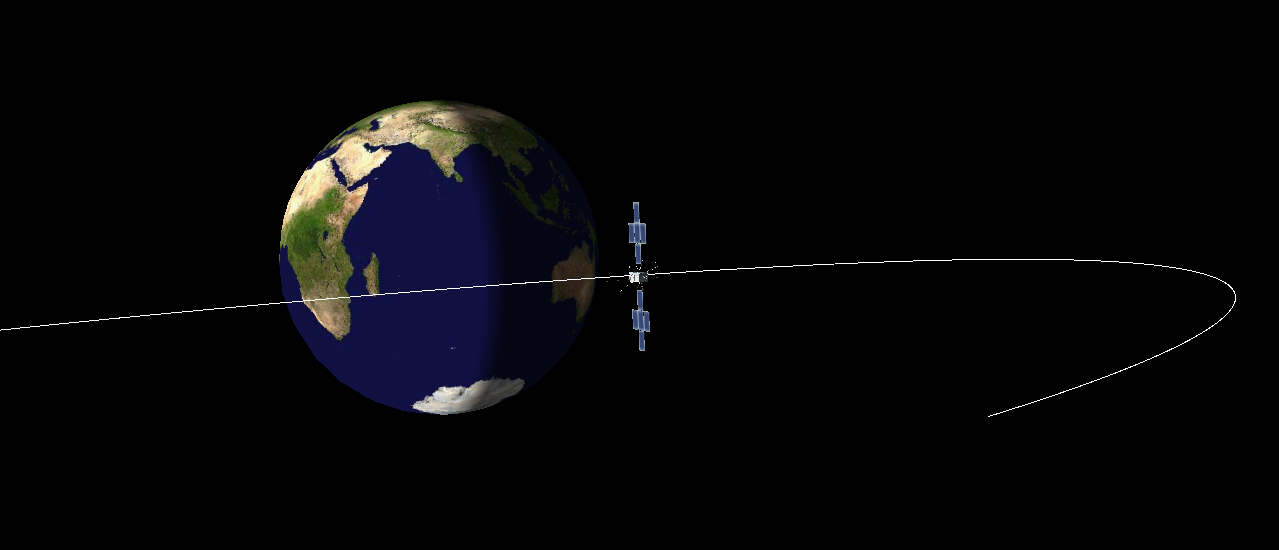
Juice is scheduled to make its closest approach on September 28 at about 11:45 UTC, passing roughly 8,640 kilometers above Earth. ESA says the flyby will change the spacecraft’s trajectory by about 20 degrees and increase its speed by approximately 3.5 kilometers per second.
Gravity saves fuel on the long trip to Jupiter
Juice launched in April 2023 and is using planetary flybys rather than relying entirely on onboard fuel to reach the outer Solar System. The spacecraft has already completed a lunar-Earth flyby in 2024 and a Venus flyby in 2025.
Monday’s maneuver is the next step in that sequence. A final Earth flyby is planned for January 2029 before Juice continues toward Jupiter, where it is expected to arrive in July 2031.
The spacecraft will briefly run on battery power
One unusual part of the upcoming encounter is that Juice will pass through Earth’s shadow shortly before closest approach. ESA says the spacecraft will be without direct sunlight from late September 27 into the morning of September 28 and will therefore rely on batteries.
Mission controllers are prioritizing the most important observations during that period to preserve power.
Science instruments are active during the flyby
Juice’s 10 science instruments are being operated between September 23 and October 3. The Earth encounter gives mission teams a chance to test equipment against a well-understood target before the spacecraft reaches Jupiter.
The navigation camera will also observe the Moon’s horizon as engineers test techniques intended to improve optical navigation around Jupiter’s moons.
Destination: three ocean-bearing moons
Once at Jupiter, Juice will study Ganymede, Callisto and Europa, three large moons believed to contain subsurface oceans. The mission is designed to examine whether those worlds could provide environments capable of supporting life.
The September Earth flyby is therefore less a destination than a carefully planned course correction on an eight-year interplanetary journey.