
The U.S. State Department has issued a fresh security warning for Americans in and around the Middle East, citing a volatile regional environment and the possibility of further escalation.
In guidance circulated by TravelGov on Saturday, U.S. citizens currently in the region were urged to exercise heightened vigilance and prepare for possible flight cancellations, airspace closures and other travel disruptions. Americans outside the Middle East were also told to seriously reconsider travel to or through the region and to monitor airline and airport operations closely.
Warning follows renewed Saudi-Houthi fighting
The alert comes as fighting between Saudi Arabia and Yemen’s Iran-backed Houthi movement has intensified. Saudi authorities said on September 19 that they intercepted a ballistic missile aimed at Riyadh, while additional attacks were reported against other locations, including the oil hub of Yanbu. The Houthis said they had targeted sensitive sites in the Saudi capital and energy facilities, though some of those claims could not be independently verified.
The Associated Press reported that smoke and an explosion were seen near Riyadh’s airport after the interception, with Saudi officials saying there were no casualties or damage from the missile. Reuters also reported the interception and said the latest escalation has increased concerns over regional security and vital oil and shipping routes.
State Department flags broader risks to U.S. interests
The State Department’s warning goes beyond air travel. It said U.S. diplomatic facilities have been targeted and cautioned that Iran and groups supportive of Iran may target American interests overseas, including locations associated with U.S. citizens, businesses and institutions.
The guidance does not amount to a single blanket “do not travel” order for the entire Middle East. Country-specific advisory levels remain in effect and vary by destination. For example, the State Department currently lists Saudi Arabia at Level 3, “Reconsider Travel,” citing armed conflict, terrorism and the risk of Iranian drone and missile attacks against American interests.
Because conditions can change quickly, travelers are being urged to check the latest country-specific alerts before departure and to confirm flight status directly with airlines rather than relying on schedules published earlier in the day.
What travelers should watch
The immediate concern is disruption: airspace restrictions can force airlines to reroute or cancel flights with little notice, while security incidents near airports can affect ground access and departure schedules. The State Department is advising Americans in the region to remain alert to embassy and consular notices and to follow local security instructions.
The regional situation remains fluid, and Trevora News will update this story if the State Department changes its guidance or if major airports announce new restrictions.
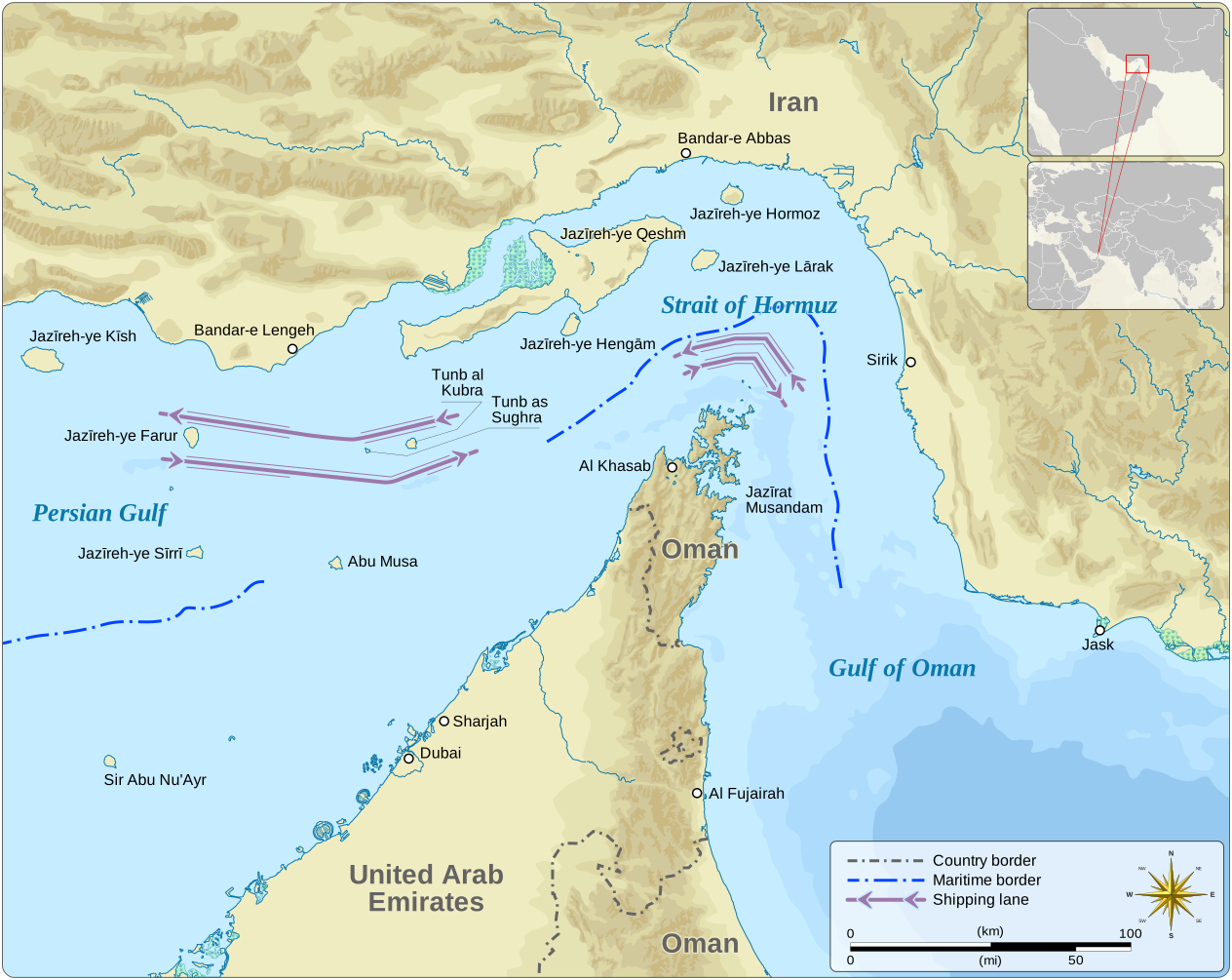
Sources: U.S. Department of State / TravelGov; Associated Press; Reuters. Featured image: Loren, public domain, via Wikimedia Commons.