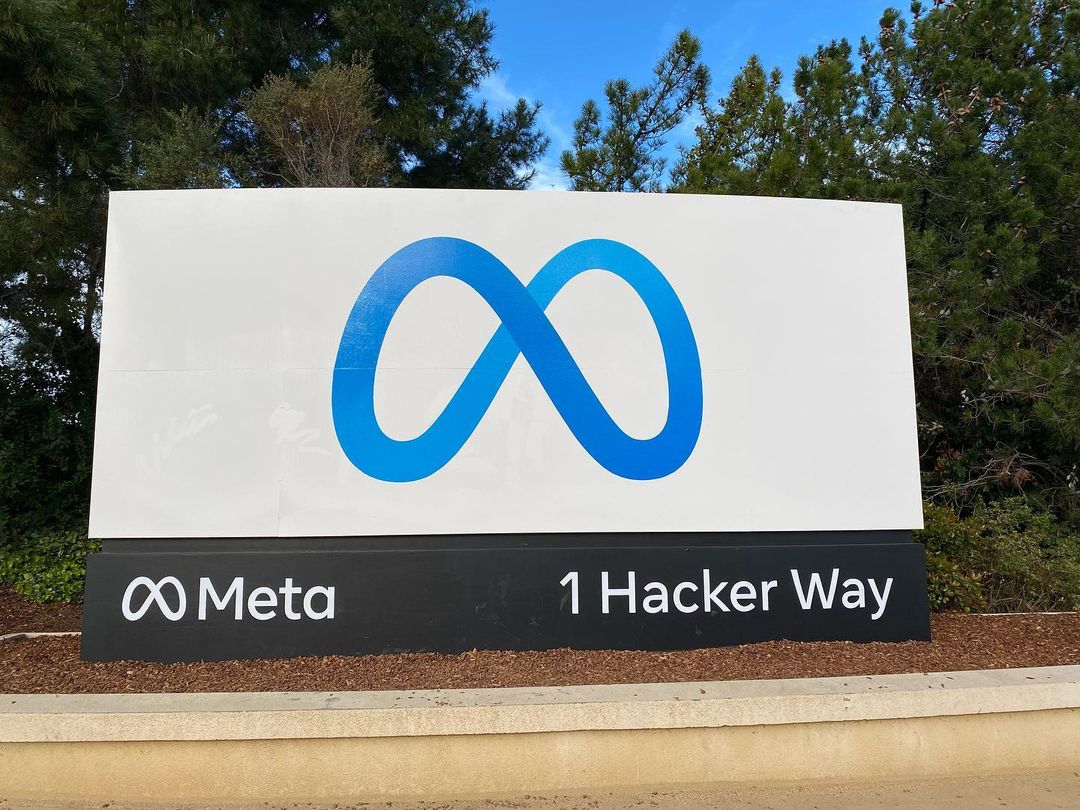
Meta Platforms said Monday it plans to raise as much as $95 billion in equity to help fund an unprecedented expansion of artificial-intelligence infrastructure. The company launched concurrent offerings of common stock and mandatory convertible preferred securities worth roughly $35 billion, while also preparing an at-the-market share-sale program of up to $60 billion once its new non-voting Class C shares begin trading. The financing marks one of the largest equity-raising plans ever attempted by a major technology company and reflects the enormous capital demands of the AI race.
Why Meta wants so much capital
Meta has sharply increased spending on data centers, chips, networking gear and cloud capacity as it develops increasingly large AI systems. The company is trying to compete with OpenAI, Anthropic and other rivals while also integrating generative AI across Facebook, Instagram, WhatsApp and its consumer products.
Its latest capital-expenditure forecast stands at $135 billion to $145 billion for 2026. That scale of spending is forcing Meta to rethink how it finances growth, even though the company remains highly profitable.
The offering has two major pieces
The first part consists of about $35 billion in common and preferred securities. Meta said it is selling Class A common shares through forward-sale agreements and issuing mandatory convertible preferred stock through depositary shares.
The second piece is a future at-the-market program of up to $60 billion. That program is expected to begin after Meta’s new non-voting Class C shares start trading, which the company expects in early 2027.
AI spending is changing Meta’s cash profile
Meta’s cash generation has historically been one of its greatest strengths. But the scale of AI investment is beginning to alter that picture. The company reported negative free cash flow of $2.12 billion in the third quarter, its first quarterly cash burn in more than a decade.
That does not mean Meta is in financial distress. It still held $82.45 billion in cash, cash equivalents and marketable securities as of September 30. But long-term debt had risen to $80.92 billion, making additional equity a way to fund infrastructure without relying only on borrowing.
Chipmakers may participate
Nvidia, AMD and Broadcom have expressed interest in purchasing up to $5 billion of Meta’s Class A shares in the offering, according to the company’s disclosures.
The possibility has attracted attention because all three firms are major suppliers to the AI infrastructure boom. Their participation would deepen financial ties between companies selling expensive chips and one of the customers buying them in huge volumes.
Concerns about circular financing
Some investors have become increasingly wary of what they see as circular funding in the AI industry. Chipmakers invest in customers, customers use the money to buy chips, and the resulting revenue can support higher valuations across the same ecosystem.
That structure does not automatically indicate a problem, but it can make it harder to determine how much demand is ultimately supported by end-user revenue rather than by capital flowing among a small group of large companies.
Meta’s long-term commitments are enormous
The company has disclosed roughly $825 billion in future spending commitments, much of it tied to data centers, cloud capacity and AI infrastructure.
Those commitments extend well beyond one fiscal year. They include leases, equipment purchases, energy contracts and other obligations needed to run AI systems at enormous scale.
The strategic bet
Chief Executive Mark Zuckerberg has argued that AI will reshape Meta’s advertising business, consumer applications and future computing platforms. The company is developing new models and consumer-facing AI products while also trying to build enough compute capacity to reduce dependence on outside cloud providers.
The central question for investors is whether the revenue gains arrive fast enough to justify the infrastructure spending.
Advertising still funds the machine
Meta’s core advertising business remains strong. Third-quarter revenue reached $64.60 billion, beating Wall Street expectations, and the company projected fourth-quarter revenue of $73 billion to $76 billion.
That profitable advertising base gives Meta more room than many AI startups to finance large infrastructure projects. But even a company of Meta’s scale must manage dilution, debt and capital discipline carefully when spending reaches this level.
Shareholder dilution becomes a real issue
Raising tens of billions of dollars through common stock can dilute existing shareholders. Mandatory convertible securities may also become common equity later, adding another layer of potential dilution.
Investors will weigh that cost against the possibility that accelerated AI investment creates a larger and more defensible business over time.
A new phase of the AI arms race
Meta’s financing plan shows that the AI competition is no longer only about model quality. Access to capital, power, data centers and advanced chips is becoming just as important.
If the full $95 billion program is completed, it would give Meta significantly more flexibility to build infrastructure quickly. It would also raise the stakes for the company to prove that its AI investments can generate returns commensurate with their extraordinary cost.