Francis Halzen, the Belgian-American physicist who turned a cubic kilometer of Antarctic ice into a telescope for some of the universe’s most elusive particles, has won the 2026 Nobel Prize in Physics.
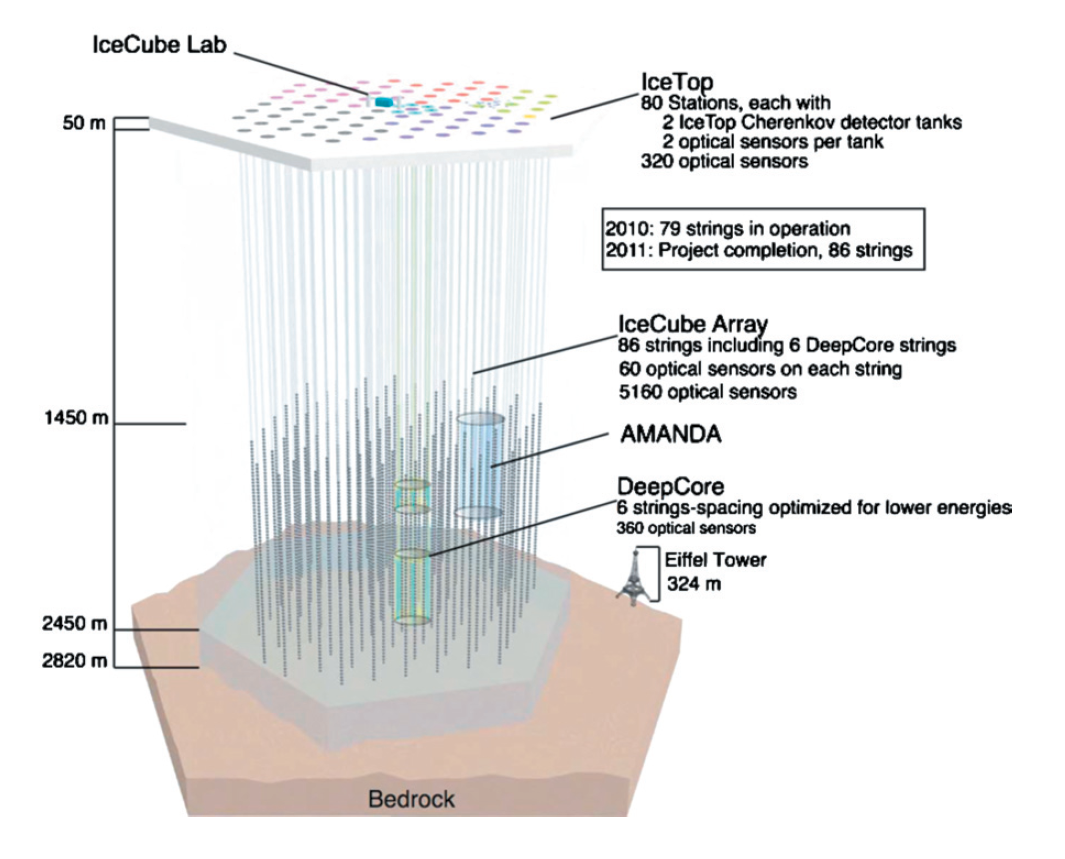
The Royal Swedish Academy of Sciences recognized Halzen for pioneering the detection of high-energy neutrinos, electrically neutral particles that can travel vast cosmic distances with little interference. His work led to the IceCube Neutrino Observatory at the South Pole, where more than 5,000 sensors embedded deep in the ice register the rare flashes created when neutrinos interact with matter.
Why IceCube changed astronomy
Unlike light, high-energy neutrinos are not deflected by magnetic fields. That means their arrival direction can point researchers back toward violent cosmic sources such as exploding stars, black holes and neutron-star systems. IceCube has already shown that energetic neutrinos reach Earth from sources inside and far beyond the Milky Way.
Halzen first proposed using Antarctic ice for the experiment in 1988. The observatory was completed in 2011 after years of engineering work in one of the harshest environments on Earth. The Nobel announcement came on Tuesday as part of the annual prize week in Stockholm.
A prize for a field still in its early years
Halzen, a professor at the University of Wisconsin-Madison, said the most important discoveries from neutrino astronomy may still lie ahead. The prize carries an award of 12 million Swedish kronor and will be formally presented in Stockholm on December 10.
The award follows Monday’s Nobel Prize in Physiology or Medicine and comes before the chemistry prize scheduled for Wednesday.
Sources
- Royal Swedish Academy of Sciences / Nobel Prize announcement schedule
- Reuters, Oct. 6, 2026