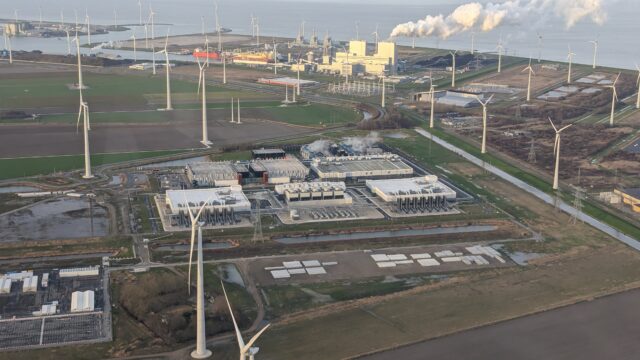
Australian AI data-center developer Firmus Technologies has abandoned its planned initial public offering, turning a price cut into a full withdrawal after investors pushed back on the company’s valuation and execution risks. The Nvidia- and Blackstone-backed company had been aiming to raise more than $5 billion in what would have been one of Australia’s largest listings in decades. Firmus said market volatility and prevailing conditions led it to withdraw the offer, but the collapse of the deal also exposed a broader change in investor behavior: public markets are becoming less willing to fund ambitious AI infrastructure plans on the strength of projected demand alone.
A sharp reversal from the original valuation
Firmus entered the IPO process with a target valuation around A$44 billion, roughly $31 billion, an extraordinary increase from its private-market value only months earlier. The company had already cut its planned offer price by about 25% as book-building progressed, an early sign that institutions were resisting the terms. By Friday, the discount was not enough. Firmus pulled the listing altogether and said it would consider private funding and other capital-market options.
The failed IPO matters because Firmus was being marketed as a direct beneficiary of the enormous investment wave around generative AI. It develops so-called “neocloud” capacity: large data-center environments equipped to host advanced processors for customers that need massive computing power. The company has relationships with major technology buyers, including OpenAI, and has argued that its infrastructure model can deliver computing capacity at competitive cost. Yet investors ultimately focused on how much of that future capacity actually exists today.
Only a fraction of planned capacity is operating
One of the most important issues in the offer was the gap between Firmus’s current footprint and its long-term ambition. Reuters Breakingviews noted that only about 42 megawatts of capacity was operating against plans that envision roughly 1 gigawatt. Building the remainder requires enormous capital expenditure, reliable power access, cooling systems, networking, permits and long-term customer commitments. A high valuation therefore depended not only on strong AI demand but on Firmus executing an unusually rapid construction program.
That execution question has become more important as the cost of capital rises. Data centers are expensive assets with long payback periods. When government bond yields are low, investors are often more willing to finance projects whose largest cash flows lie years in the future. In 2026, however, U.S. and European yields have climbed to multi-decade highs. Companies building AI infrastructure now have to prove that future revenue can justify much higher financing costs.
The AI boom is entering a more selective phase
The collapse does not mean investors have lost faith in artificial intelligence. Spending on chips, power equipment, fiber networks and data centers remains historically high. Nvidia and major semiconductor suppliers continue to report strong demand, while hyperscalers are committing tens of billions of dollars to AI infrastructure. What has changed is the willingness to treat every company attached to that spending cycle as equally valuable.
Public investors are asking harder questions about customer concentration, contract duration, utilization rates, power availability and financing. They want to know whether a company has binding long-term commitments or simply a pipeline of expected demand. They are also paying more attention to debt. Several AI infrastructure projects depend on large borrowings that will only make economic sense if expensive hardware remains heavily utilized for years.
OpenAI concerns have added to the caution
The Firmus withdrawal came during a week when questions about OpenAI’s revenue trajectory and financing needs hit chip and infrastructure stocks. Reuters reported that investors had become concerned about a gap between earlier signals and the company’s annualized September revenue. Whether those concerns prove temporary or not, they reminded markets that the AI ecosystem’s huge capital requirements ultimately need to be supported by customer revenue.
For data-center operators, this matters directly. Their business depends on cloud providers, model developers and enterprises renting enough computing capacity to justify the construction of increasingly power-hungry facilities. If AI revenue grows more slowly than infrastructure spending, returns could fall across the chain. That possibility is one reason investors have become more disciplined about the prices they will pay for new listings.
Firmus was not the only IPO to struggle in 2026
The company’s withdrawal fits a broader pattern. Several large offerings around the world have been postponed, cancelled or resized this year as market volatility and high interest rates made buyers more selective. Clear Street in the United States withdrew its listing after cutting its fundraising target. Smart-ring maker Oura delayed a U.S. IPO. Defense company KNDS, nuclear company Holtec and other issuers have also postponed deals.
This has complicated hopes for a sustained global IPO recovery. Companies and private-equity owners entered 2026 expecting public markets to reopen after several difficult years. Instead, geopolitical conflict, energy-price shocks and rising government yields have made it harder to price long-duration growth companies. Businesses with clear profits and mature cash flows can still attract buyers, but speculative valuations are facing stronger resistance.
Why Australia was watching closely
Firmus would have been one of the biggest Australian IPOs in decades and a major test for the country’s equity capital market. Australia has strong pension assets and a sophisticated institutional investor base, but local markets have not historically hosted many companies valued primarily on global AI infrastructure growth. A successful deal could have encouraged more technology companies to consider Sydney rather than U.S. exchanges.
The withdrawal may have the opposite effect in the short term. Other high-growth issuers are likely to study the Firmus experience before deciding how aggressively to price their own offerings. Investment banks may also recommend more conservative valuations or larger private funding rounds before companies approach public investors.
Private capital remains an option
Firmus is not being forced to stop building simply because the IPO failed. The company has said it will explore alternative capital sources, including private markets. Large infrastructure funds, sovereign wealth funds and strategic technology investors have all shown strong appetite for data centers. Private financing can also give management more flexibility because there is no daily share price and less pressure to meet quarterly expectations.
But private investors will ask many of the same questions that public investors did. They will want visibility on power, construction costs, customer contracts and returns. Firmus may be able to raise capital, but the withdrawn IPO suggests that the price of that capital could be higher and the valuation lower than management originally hoped.
A useful warning for the AI infrastructure trade
The most important lesson from Firmus is not that the AI boom is ending. It is that the market is starting to separate infrastructure companies with proven economics from those that still rely heavily on future scale. That distinction is likely to become more important as trillions of dollars of additional financing are sought for chips, data centers, transmission lines and power generation.
For investors, the aborted IPO provides a clear example of valuation discipline returning to a sector that has often been priced on scarcity and growth narratives. For Firmus, the challenge now is operational: build more of the capacity it has promised, demonstrate durable customer demand and return to capital markets when the economics are easier to defend. If it can do that, the failed listing may prove a delay rather than a permanent setback. If not, it could become an early symbol of the point when AI infrastructure enthusiasm began facing much stricter financial tests.

Sources
- Firmus Technologies IPO and withdrawal statements
- Australian Securities Exchange filings and offer materials
- Reuters and Reuters Breakingviews, Oct. 9, 2026