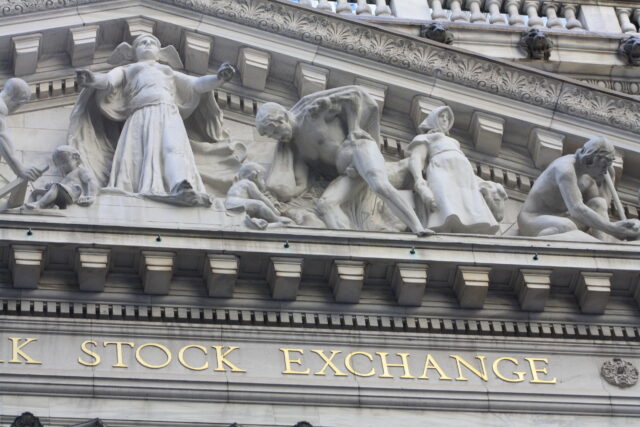
Wall Street ended Friday sharply lower as investors sold technology shares, reassessed the economics of debt-heavy artificial-intelligence infrastructure projects and reacted to another jump in oil prices. The S&P 500 fell about 1.1%, the Nasdaq Composite lost more than 2%, and the Dow Jones Industrial Average also closed lower. The session capped a volatile week in which concern shifted from whether AI demand remains strong to whether the financing behind that demand can remain affordable.
AI stocks were at the center of the selloff
Technology and communication-services shares led the decline. Investors have become increasingly sensitive to the amount of borrowing required to build data centers, secure power and buy advanced processors.
The pressure has been especially visible in companies whose expansion depends heavily on debt markets rather than internally generated cash.
CoreWeave became a symbol of the financing problem
AI cloud provider CoreWeave has drawn attention after a sharp selloff in its bonds pushed yields on some debt above 15%. The company has been one of the clearest examples of the capital-intensive model behind the AI infrastructure boom.
As investors demand higher returns for lending to AI-linked companies, the cost of new projects rises and the timeline for profitability becomes more important.
Semiconductor shares also weakened
The Philadelphia Semiconductor Index extended a difficult run as investors questioned whether years of aggressive spending can continue at the same pace. Chip demand remains strong, but valuations have been built around expectations of very high long-term growth.
When financing costs rise, even companies with strong revenue can face pressure because customers may delay infrastructure investment.
Oil added another layer of risk
Brent crude climbed almost 4% and settled near $110 a barrel amid renewed concern about Middle East supply disruptions and attacks on Russian refining infrastructure.
Higher energy prices can feed inflation and reduce the likelihood that central banks will cut interest rates. That connection matters for technology shares because their valuations are especially sensitive to long-term borrowing costs.
Inflation data has changed the rate debate
Recent U.S. inflation figures have pushed investors to consider whether the Federal Reserve may need to keep rates higher for longer or even tighten again. Treasury yields moved sharply during the week as traders balanced recession risk against renewed inflation pressure.
The result is a more difficult environment for growth stocks that benefited from expectations of cheaper money.
Market leadership has become narrow
The S&P 500 remains higher for the year, but a large share of the gains has been concentrated in a relatively small group of AI-related companies. Reuters data showed that many individual index members have still fallen this year.
Narrow leadership becomes a vulnerability when the strongest sector begins to weaken because fewer areas of the market are available to offset losses.
Earnings season now carries more weight
Investors will turn to upcoming results from major technology companies including Meta and Tesla for evidence that large AI investments are translating into revenue and profit growth.
Strong earnings could stabilize sentiment, while disappointing guidance may deepen questions about capital spending and valuations.
Defensive sectors held up better
Utilities and energy shares performed better than technology as investors looked for businesses with more immediate cash flows or direct exposure to higher commodity prices.
This rotation suggests the market is not simply pricing slower growth; it is also adjusting to a possible regime of higher inflation and higher financing costs.
The weekend leaves investors with multiple risks
Geopolitical tension, oil supply uncertainty, AI credit stress and the path of U.S. interest rates are now interacting. Any one of those factors could move markets sharply when trading resumes.
Friday’s decline therefore looked less like a single-sector correction and more like a broad reassessment of how much risk investors are willing to carry into the next round of earnings reports.
Sources
- Reuters market coverage, Oct. 16, 2026
- U.S. equity and bond market data