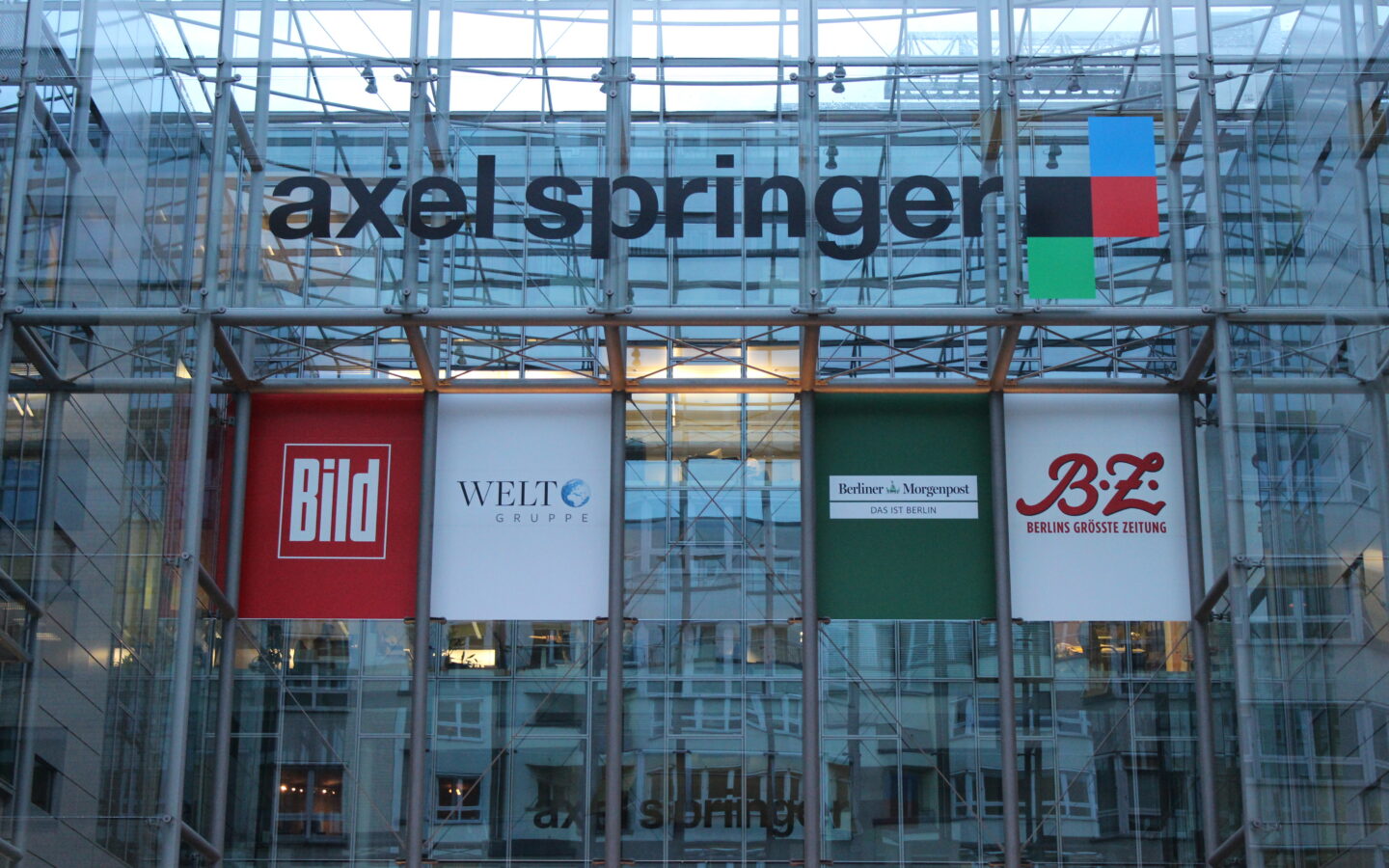
Britain’s government has cleared the way for German media group Axel Springer to acquire the Telegraph Media Group after Culture Secretary Lisa Nandy decided not to refer the transaction to a more detailed Phase 2 competition investigation. The decision removes a major regulatory obstacle from one of the most closely watched newspaper ownership battles in the United Kingdom.
The government ended the public-interest intervention
Nandy said the Public Interest Intervention Notice and related merger reference order were no longer in force. That means the transaction will not be escalated to a deeper investigation by the Competition and Markets Authority under the current process.
The decision is significant because newspaper ownership in Britain is subject to both competition and public-interest scrutiny.
Axel Springer gains a major UK media asset
The Telegraph Media Group owns The Daily Telegraph, The Sunday Telegraph and associated digital operations. Axel Springer already owns major media brands in Germany and the United States.
The acquisition would expand its English-language news footprint and give it one of Britain’s most influential conservative newspaper brands.
The Telegraph has been through a long ownership saga
The group’s future has been uncertain for years following financial disputes involving its former owners. Several bidders and financing structures have been considered.
An earlier proposed acquisition involving Abu Dhabi-backed RedBird IMI was blocked after concerns over foreign state influence on newspaper ownership.
Press freedom became central to the debate
The previous controversy led to broader political debate over whether foreign governments or state-backed investors should be allowed to control British newspapers.
That debate eventually resulted in tighter restrictions on foreign state ownership, reshaping the pool of potential buyers.
Axel Springer presents a different regulatory profile
Unlike a sovereign-backed investor, Axel Springer is an established private media company with operations across Europe and the United States.
That structure reduced some of the public-interest concerns that surrounded earlier bids, although questions about editorial independence and market concentration remained.
Media consolidation is accelerating
Traditional newspapers face pressure from declining print circulation, digital advertising competition and rising technology costs. Larger media groups can spread subscription technology, data systems and newsroom investment across multiple brands.
That logic has encouraged cross-border consolidation, especially among publishers seeking more scale in digital subscriptions.
The Telegraph brand still carries political influence
Although print circulation has fallen across the industry, the Telegraph remains a powerful voice in British politics and public debate.
That influence is why ownership changes attract more scrutiny than a conventional corporate acquisition of similar financial size.
Axel Springer will need to protect editorial trust
Regulatory clearance does not eliminate reputational risk. Readers and journalists will watch closely for any changes in editorial direction, staffing or investment.
Maintaining a clear separation between ownership strategy and day-to-day editorial decisions will be important for the group’s credibility.
Digital strategy will be a major test
The Telegraph has invested heavily in digital subscriptions, but the wider market is competitive. Axel Springer has experience with paid digital journalism through brands such as Bild, Welt and Business Insider.
Applying that experience without weakening the Telegraph’s distinct identity will be one of the central strategic challenges.
The deal also matters for UK media policy
The government’s decision will be watched as a precedent for future newspaper transactions. Britain is trying to balance open investment with concerns over media plurality, political influence and press independence.
Those tensions are unlikely to disappear even after this transaction closes.
Clearance ends one chapter, not the ownership debate
Axel Springer now has a clearer route to complete the transaction. The next phase will focus on integration, investment and the future editorial positioning of the Telegraph brands.
For the British media industry, the deal highlights how financial pressure, international capital and public-interest regulation are increasingly intertwined.
Sources
- UK Culture Secretary statement, Oct. 16, 2026
- Reuters, Oct. 16, 2026
- UK media-regulation background and Ofcom materials