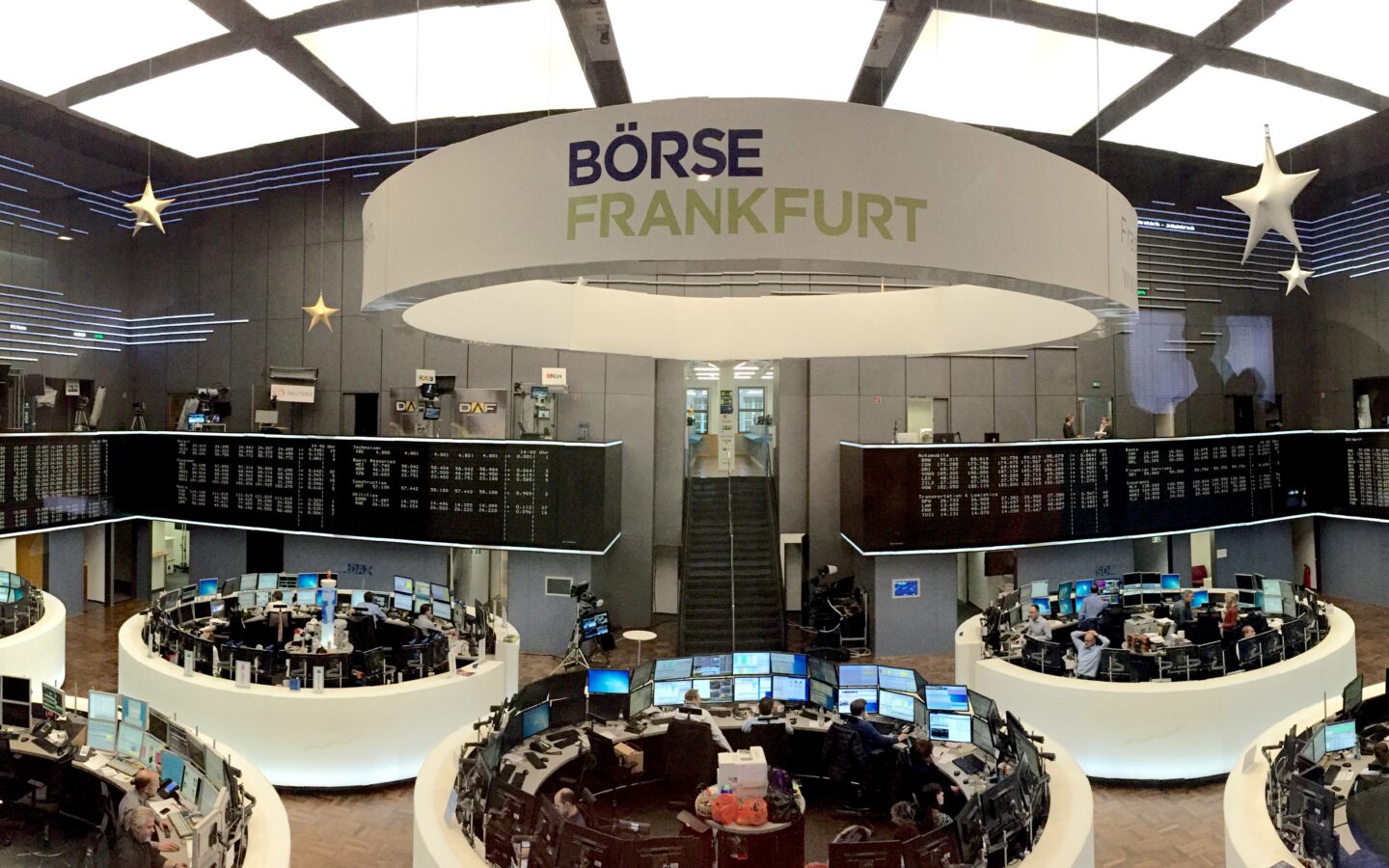
European equities ended Friday under broad pressure, with the STOXX 600 falling 1.1% to 635.45 as automobile and telecommunications shares led the decline. The benchmark finished the week down 0.6%, giving back earlier gains in a period dominated by central-bank decisions, energy-price volatility and renewed concern about inflation.
The auto sector was among the weakest parts of the market after Volkswagen sharply reduced its 2026 profit outlook. Volkswagen shares fell 5.6%, while Porsche-related shares also declined as investors absorbed a large package of impairments and restructuring charges.
Autos and telecoms led the selloff
European auto shares dropped about 3.4% as Volkswagen warned that around €10 billion in special items would weigh on operating profit this year. The company now expects an operating return on sales of no more than 1%, down from a previous forecast range of 4% to 5.5%.
Telecommunications stocks were also hit hard, falling roughly 3.3%. Airtel Africa was one of the day’s biggest losers after reports that its mobile-money unit could pursue a smaller London listing than investors had expected. Orange also declined after a brokerage downgrade.
Nestlé and energy shares added pressure
Nestlé shares fell after Russia placed the Swiss food group’s local operations under external management, adding another geopolitical risk for European multinationals still operating in Russia. Energy stocks also weakened despite crude oil remaining above $100 a barrel.
The broader market backdrop was shaped by a renewed global tightening cycle. The Federal Reserve raised U.S. rates this week, the Bank of Japan lifted its benchmark to a 31-year high, and the European Central Bank has maintained a restrictive stance as policymakers respond to inflation risks amplified by elevated energy prices.
Investors look toward next week
Healthcare and insurance were among the more resilient sectors on Friday, but the overall tone remained cautious. Investors are now watching whether bond yields stabilize and whether the upcoming U.S.-China talks can reduce trade uncertainty.
European markets also remain highly sensitive to oil. Any renewed disruption to Middle East energy supply could raise inflation expectations and complicate the outlook for interest rates, while a sustained decline in crude could offer relief to both consumers and rate-sensitive sectors.
Sources: Reuters market reporting and Volkswagen Group corporate disclosures, September 18, 2026.