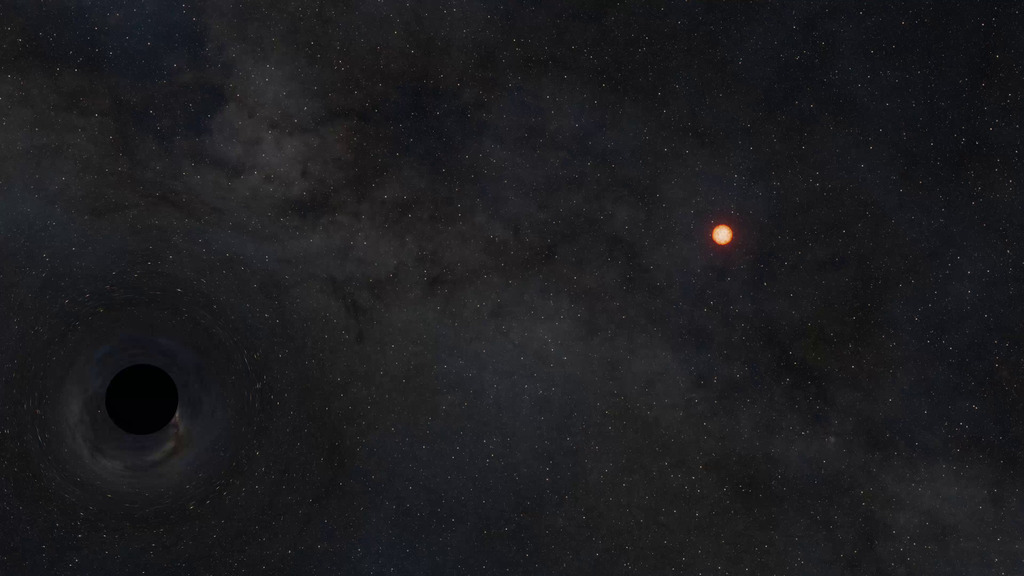
Astronomers may have found a predictable pattern in when supermassive black holes launch powerful jets and outflows after tearing apart nearby stars.
A study led by researchers including Adelle Goodwin and Andrew Mummery examined radio observations of 20 tidal disruption events, episodes in which a star is shredded by a black hole’s gravity. The team found jet activity appears in two main phases tied to how quickly material is falling into the black hole.
Jets at high and low feeding rates
The first phase can occur when the black hole is consuming matter rapidly. A second burst of radio activity may appear hundreds or thousands of days later, once the feeding rate has fallen to only a small fraction of its peak.
The pattern resembles behavior seen around much smaller stellar-mass black holes, suggesting that some accretion physics may scale across enormous differences in black-hole mass.
If confirmed in larger samples, the result could help observatories decide when to return to tidal-disruption events for follow-up measurements. That is important because radio telescope time is limited and delayed jets can otherwise be missed. The study also gives researchers another way to test how disks, magnetic fields and outflows interact around black holes.