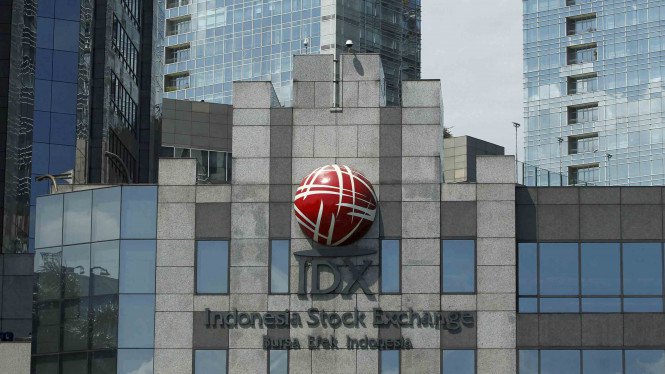
Indonesian stocks suffered their worst one-day decline since the Asian financial crisis after MSCI said it was considering reclassifying the country from emerging-market to standalone status. The Jakarta Composite Index fell 11.4% on Friday, while the rupiah also weakened as investors confronted the possibility of large fund outflows and a major loss of index status.
Why MSCI status matters
MSCI indexes are used by global asset managers to allocate trillions of dollars. Emerging-market status allows Indonesia to be included in benchmark funds that automatically hold securities based on index weight.
A move to standalone status would remove Indonesia from many of those portfolios.
Potential outflows could be enormous
Market estimates cited by Reuters suggest a reclassification could trigger billions of dollars in selling from passive and active funds.
The exact amount would depend on the final index treatment and the timing of the change.
The proposal is more severe than a frontier downgrade
MSCI’s classification ladder includes developed, emerging, frontier and standalone markets. Standalone status generally applies when accessibility problems are too severe for normal inclusion in the broader market indexes.
That made the announcement more damaging than investors had expected.
MSCI cited governance and market-function concerns
The index provider said international investors continue to raise concerns about transparency in shareholding structures, suspected coordinated trading and evidence of effective enforcement.
Indonesian regulators have announced reforms, but MSCI said progress has not yet been sufficiently consistent.
Reforms include higher disclosure standards
Authorities have proposed more detailed shareholder disclosure, new concentration reporting and a path toward a minimum 15% free-float requirement.
MSCI acknowledged those measures but emphasized that implementation matters more than announcements.
Major stocks hit daily limits
Banks, miners and energy companies were among the shares hit by the selloff. Several large companies reached the exchange’s lower daily price limit.
That kind of synchronized decline indicates forced risk reduction rather than company-specific news.
The rupiah also weakened
Currency pressure can reinforce equity outflows because foreign investors face losses both on shares and exchange rates.
If the central bank intervenes heavily to stabilize the rupiah, it may also affect domestic liquidity conditions.
Indonesia has already had a difficult year
Indonesian equities were among the world’s weakest major markets even before Friday’s drop. Concerns over governance, policy and global risk appetite had already reduced investor demand.
The MSCI announcement turned those concerns into a potential structural problem.
A final decision is not immediate
MSCI has launched a consultation rather than completed the reclassification. The provider expects to announce a final decision by the end of June 2027.
That gives Indonesian authorities time to demonstrate stronger market governance and enforcement.
The burden is now on regulators
To avoid a downgrade, Indonesia will need to show that reforms are producing measurable changes in market functioning. Foreign investors will look for transparent ownership data, credible enforcement and less evidence of coordinated trading.
Friday’s 11.4% collapse shows how much is at stake. Index classification may sound technical, but it can determine access to global capital on a very large scale.
Sources
- MSCI consultation announcement, Oct. 15, 2026
- Reuters, Oct. 16, 2026